
Man-made Horrors Beyond Comprehension
Exhibition at Pharmakon dives deep into the prophetic work of David Dees.
From the desk of Jak Ritger, March 29, 2026
In 2022, I participated in Aaron Moulton's experimental anthropology exhibition, The Influencing Machine at Ujazdowski Castle Centre for Contemporary Art. Through this experience I was introduced to Aaron's idiosyncratic approach to research and exhibition design. Rather than adopting the detached academic posture that keeps controversial stories at arms length, Aaron dives into the dirt, getting imbricated in the secret designs of power. His tenacity to expose and contextualize the episodes of art history that power brokers would rather leave in the shadows was truly inspiring to my practice. It became apparent that it was not necessarily the facts or historical record that was dangerous but the act of contextualization – making the motives and deeds of the past accessible is threatening.
Man-made Horrors Beyond Comprehension
Conspiracy by Aaron Moulton, at Pharmakon Gallery, Romania, Bucharest - February 27 to April 26, 2026. Featuring work by Sara Bezovšek, the Estate of David Dees, Tibor Dieters, Gloria Frau, Mark Lombardi, Andrei Nitsu, Jon Rafman, Jak Ritger, Dorian Electra & Count Baldor. Media partners: PostPostPost & Subliminal Jihad. Logo by Jak Ritger.
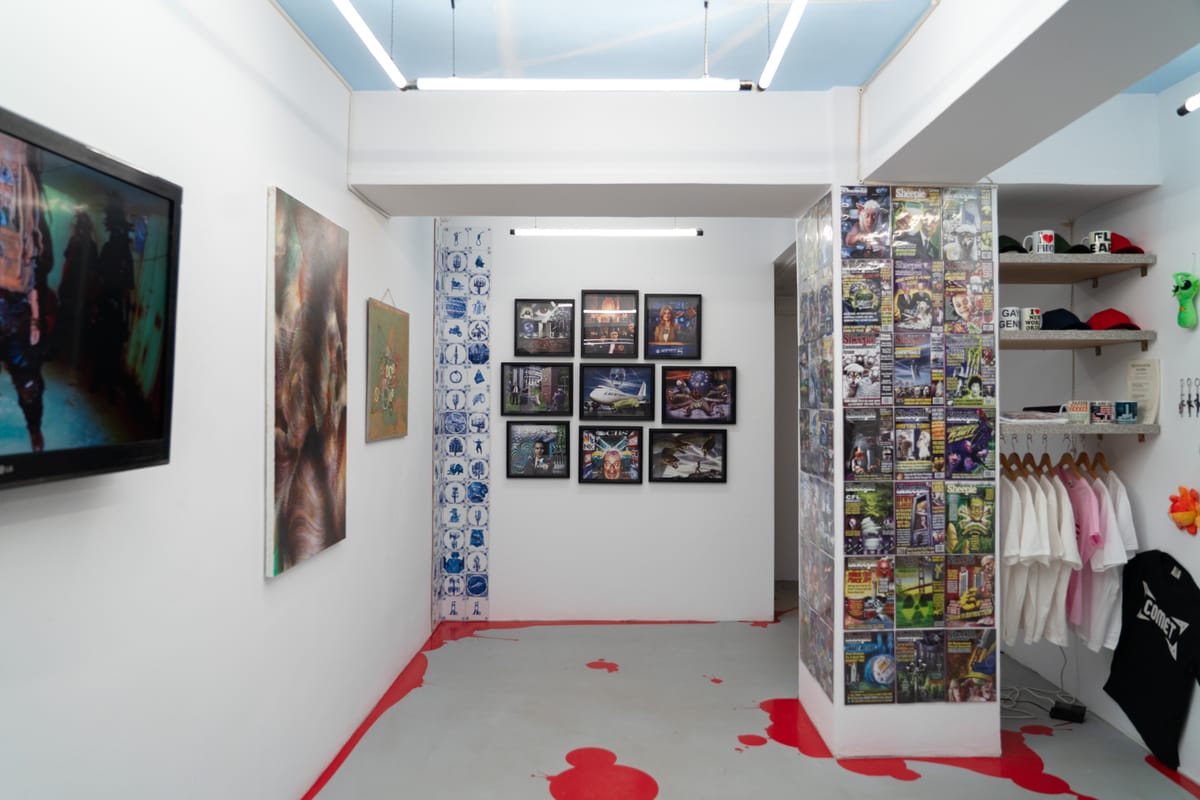
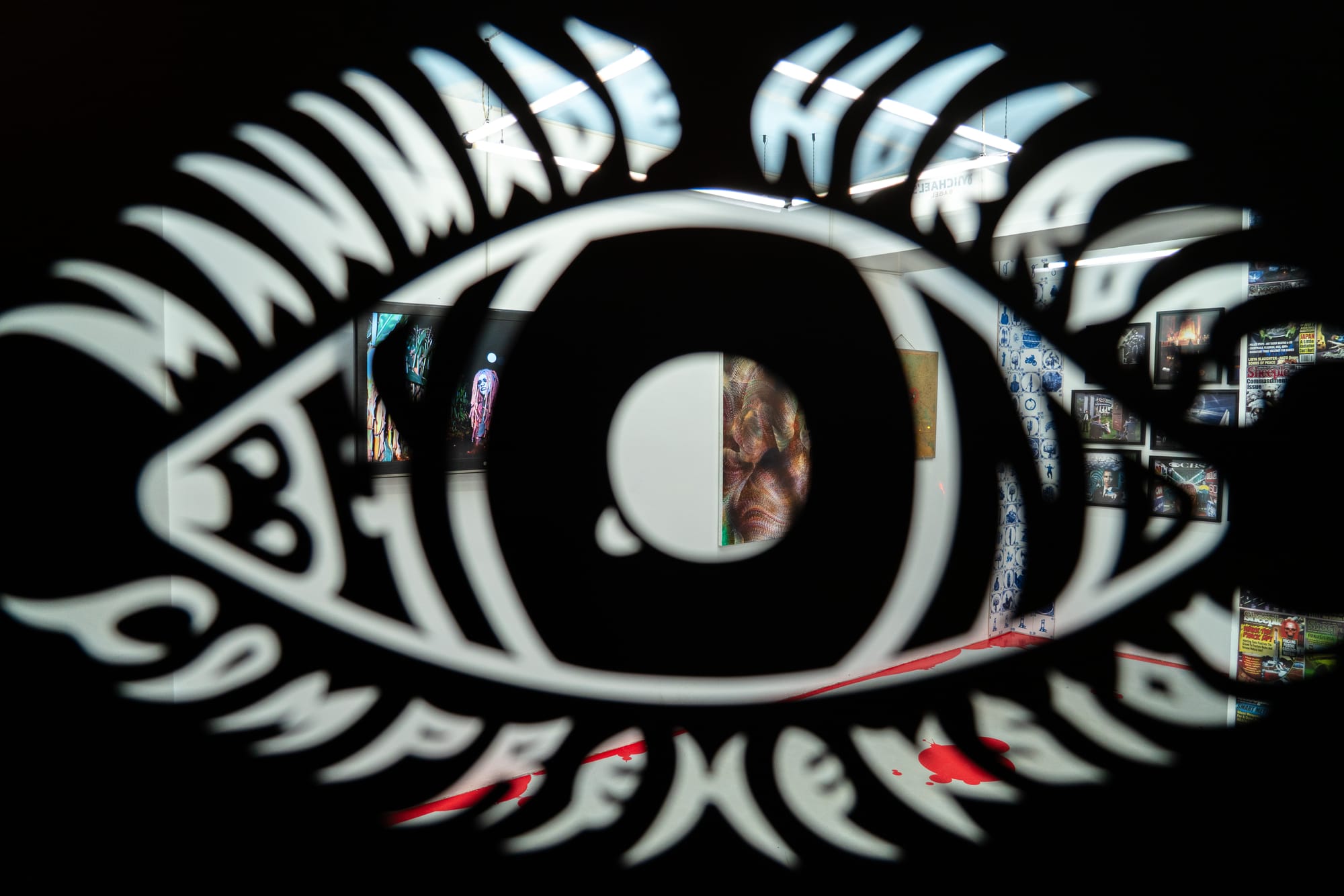
Last summer, Aaron invited me to develop a new site-specific installation responding to the work of the late David Dees, an American artist, designer and illustrator known for defining the aesthetics of conspiracy theory media in the aughts and 2010s. I began the process by surveying Dees's digital compositions: sci-fi horror scenes of secret weapons, evil alien overlords and murderous world leaders. I wanted to pick out architectural and aesthetic signatures that I could repurpose. The aim was to put gallery goers into the psychogeographic register of Dees's collages as they entered Pharmakon or passed by the Bucharest artist-run space on the street. Much of Dees's work exists in the liminal void of Photoshop layers, an ever expanding plateau of references and additions in which any sense of scale, time or distance is manipulated for maximum limbic response. Scenes that do have a more rigid sense of place fall into three main settings: corporate backroom, governmental seat of power or outdoor dystopic catastrophe scene. A through-line in the all of his pictures is a certain behind-the-scenes-ness: clandestine meetings, secret machinery of evil or the powerful showing their true colors. It is this sense of literalism and chaotic potency that made Dees's work so incredibly salient in the burgeoning ecosystem of conspiracy theory driven alt media.
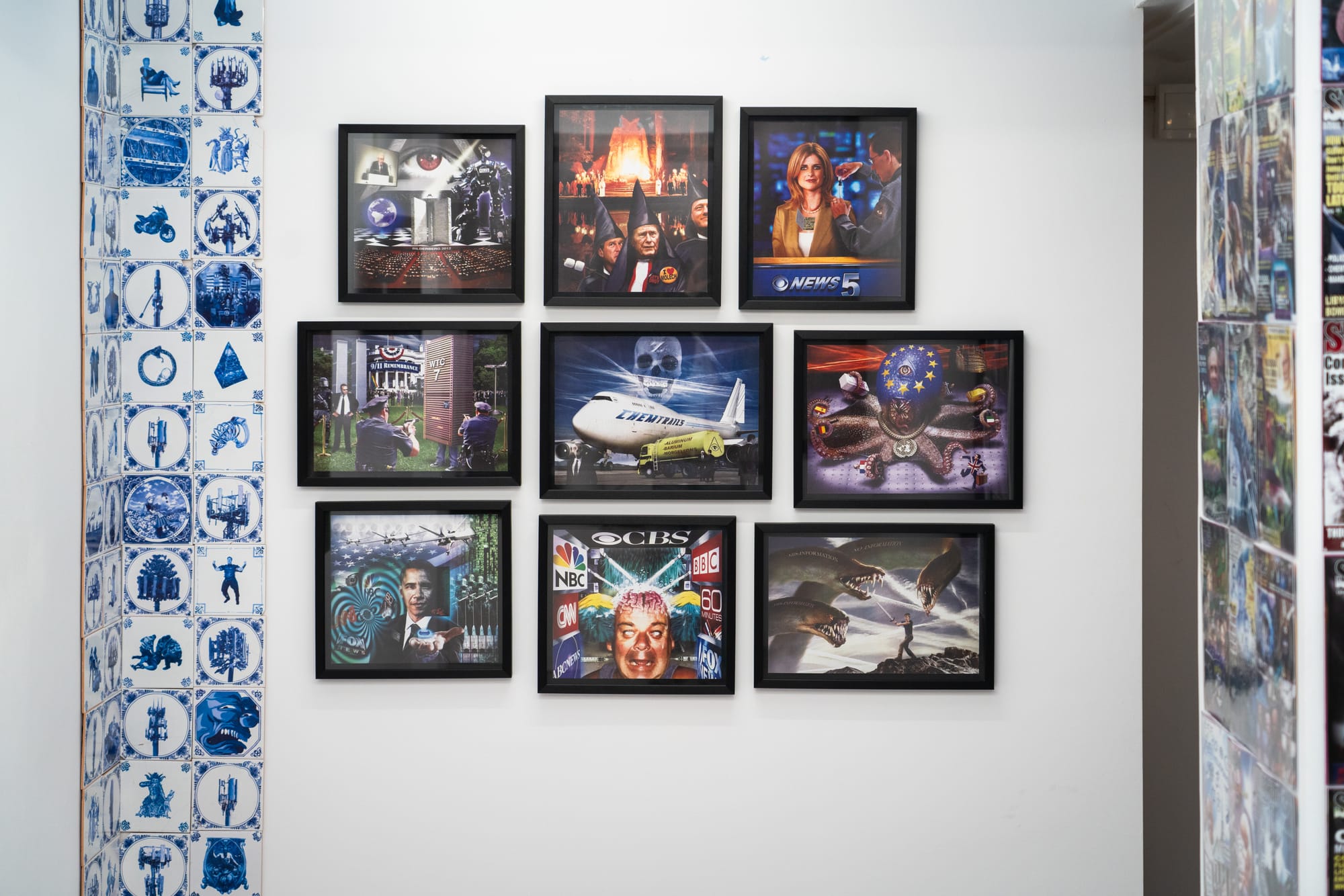
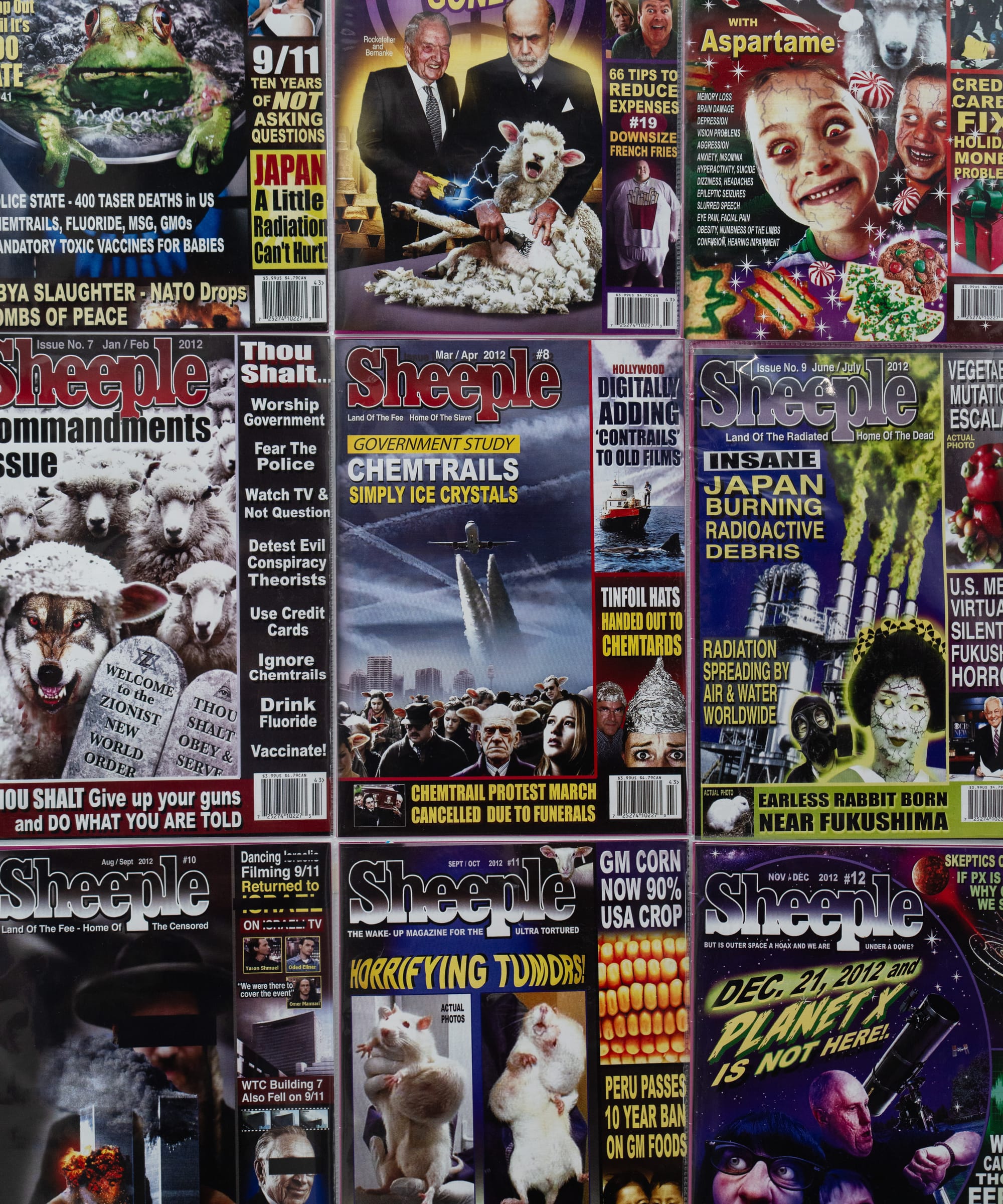
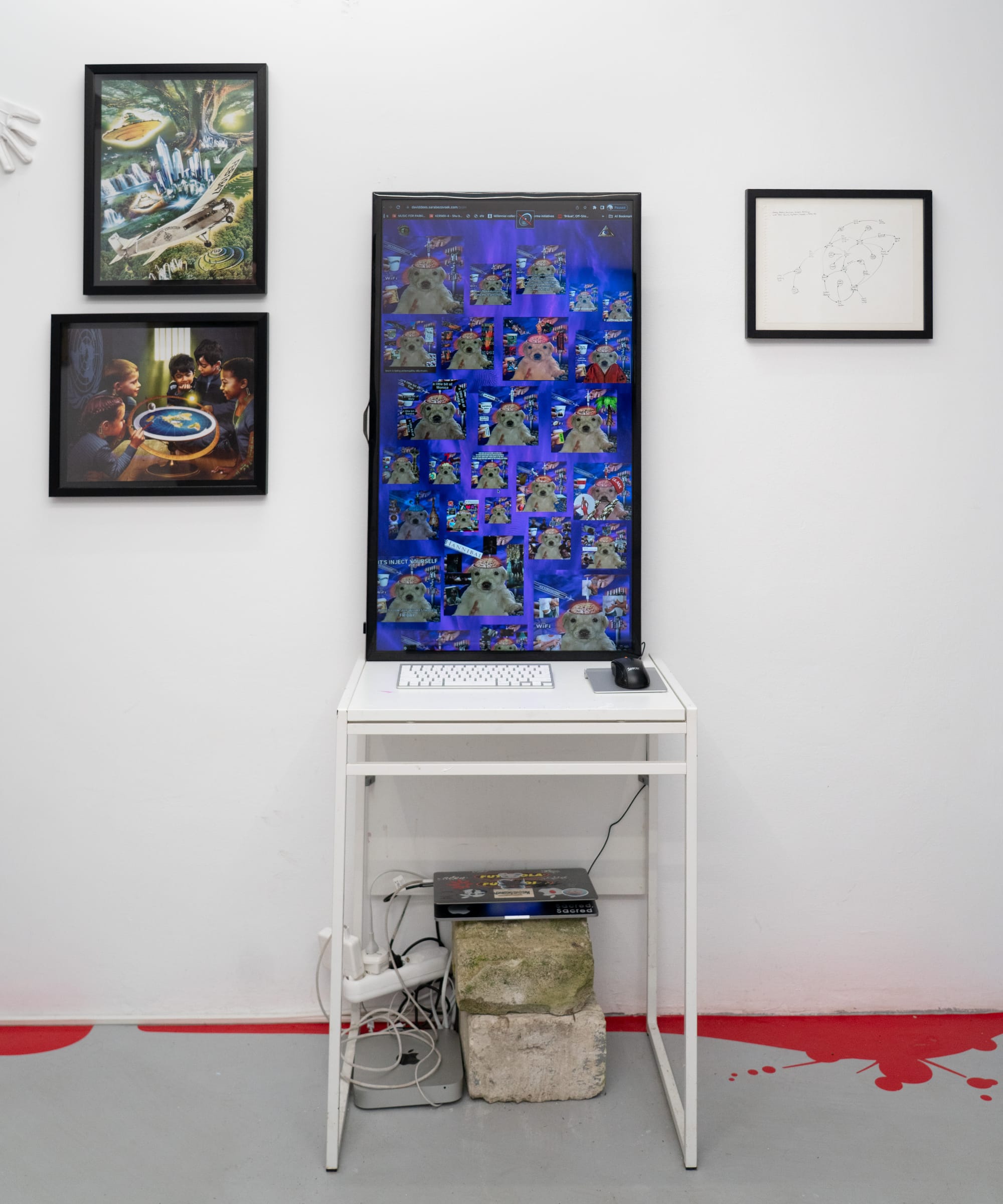
David Dees (1957-2020) on view at "Man-made Horrors Beyond Comprehension" at Pharamkon Gallery, left: a selection of iconic digital collage prints, right: rare & never-before seen covers from Dees's hypothetical glossy periodical, Sheeple Magazine
His lizard people, state sponsored massacres and the sickening cruelty of elite suits served as the perfect banner images for self-published screeds on sketchy blogs and stream of consciousness 5D-downloads on Facebook. While Dees's tableaus deal in highly problematic tropes (every -phobic and -ism is present) there is a nostalgia in his pictures for a time before our current hyper-partisan political landscape. Liberal democratic leaders are just as likely to be adorned with vampire teeth as the Bush family. It is this sense of Gen-X libertarianism, that made villains out of any all corrupt politicians, that I find endearing today. The current arrangement of political economy cultivates algorithmic audience capture like patches of black mold on the walls of the echo chamber. Prominent conspiracist, Alex Jones has devolved into a MAGA supplement shill when just a decade ago he was a fierce attacker of Trump's pedophile financier friend, Jeffery Epstein and his ilk. Dees's work functions as raw material for conspiracy folklore, an ur-image from which the imagination of story tellers can spring forth. To fully understand the epistemological shift underway today, I believe it is imperative to dive into this work and imbibe it's deadly strain of cancer fighting cannabis.
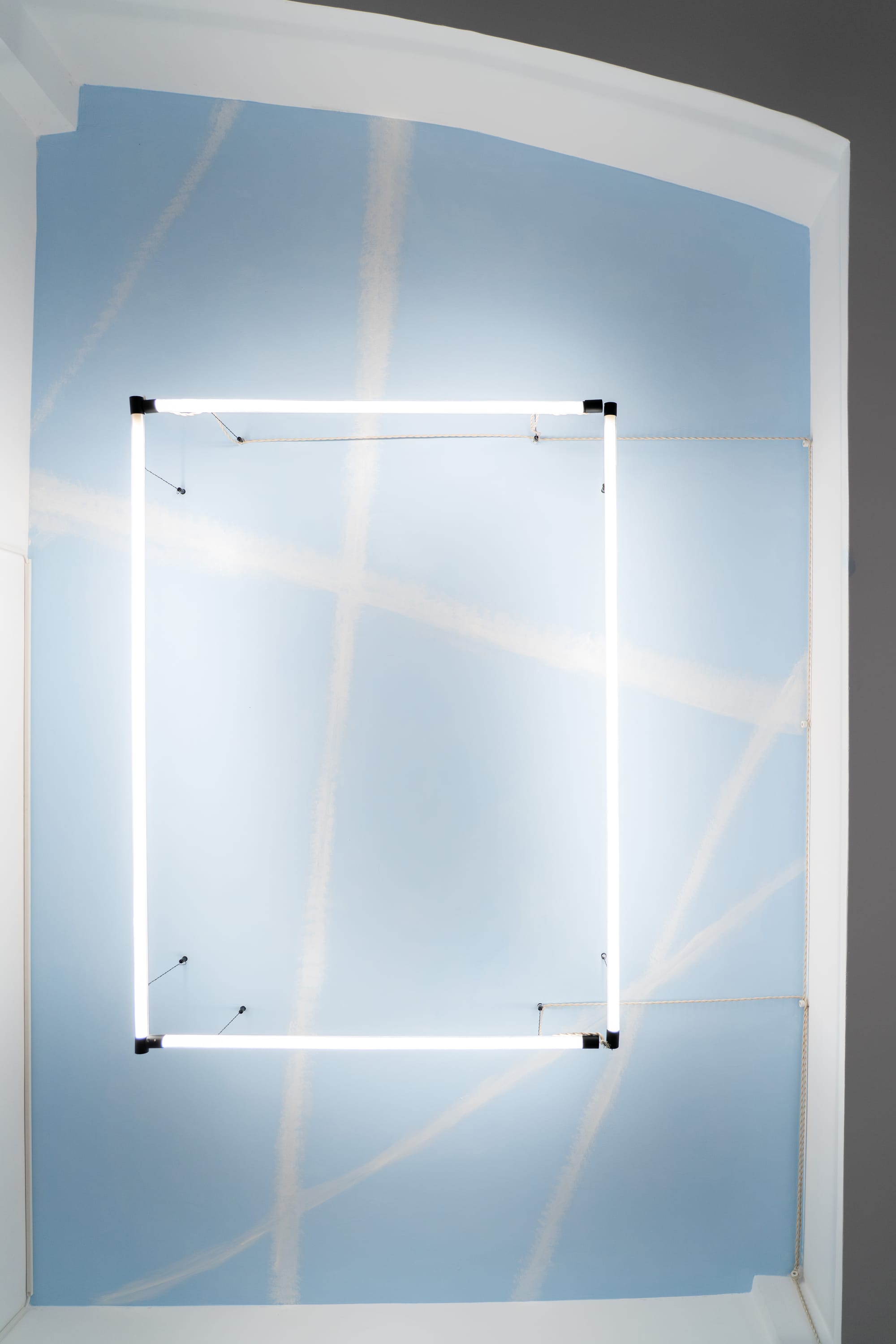
The reoccurring motif in Dees's pictures is the chemtrail. He paints the toxic airline exhaust tails into almost every daytime skyline throughout his work. The chemtrail / contrail conspiracy is perhaps the most prevalent of all contemporary paranoia stories for its visual accessibility (just look up in the sky on any given day) and the accepted truth (airline pollution is toxic and contributing to global warming.) There is also a certain poetic quality to the vapor streams streaking across the near-heavens, connecting faraway places, people and ideas. The dotted dissipations marking the journeys our spirits take after passing on. I conceptualized a painted chemtrail ceiling for the exhibition as a gesture of connection between the works included in the show and as an opening up of a horizon of understanding — an invitation to take what you can from corporeal experience and make peace with the unknowable. Perhaps this decadent vista can offer solace to those on a journey out of dark places.
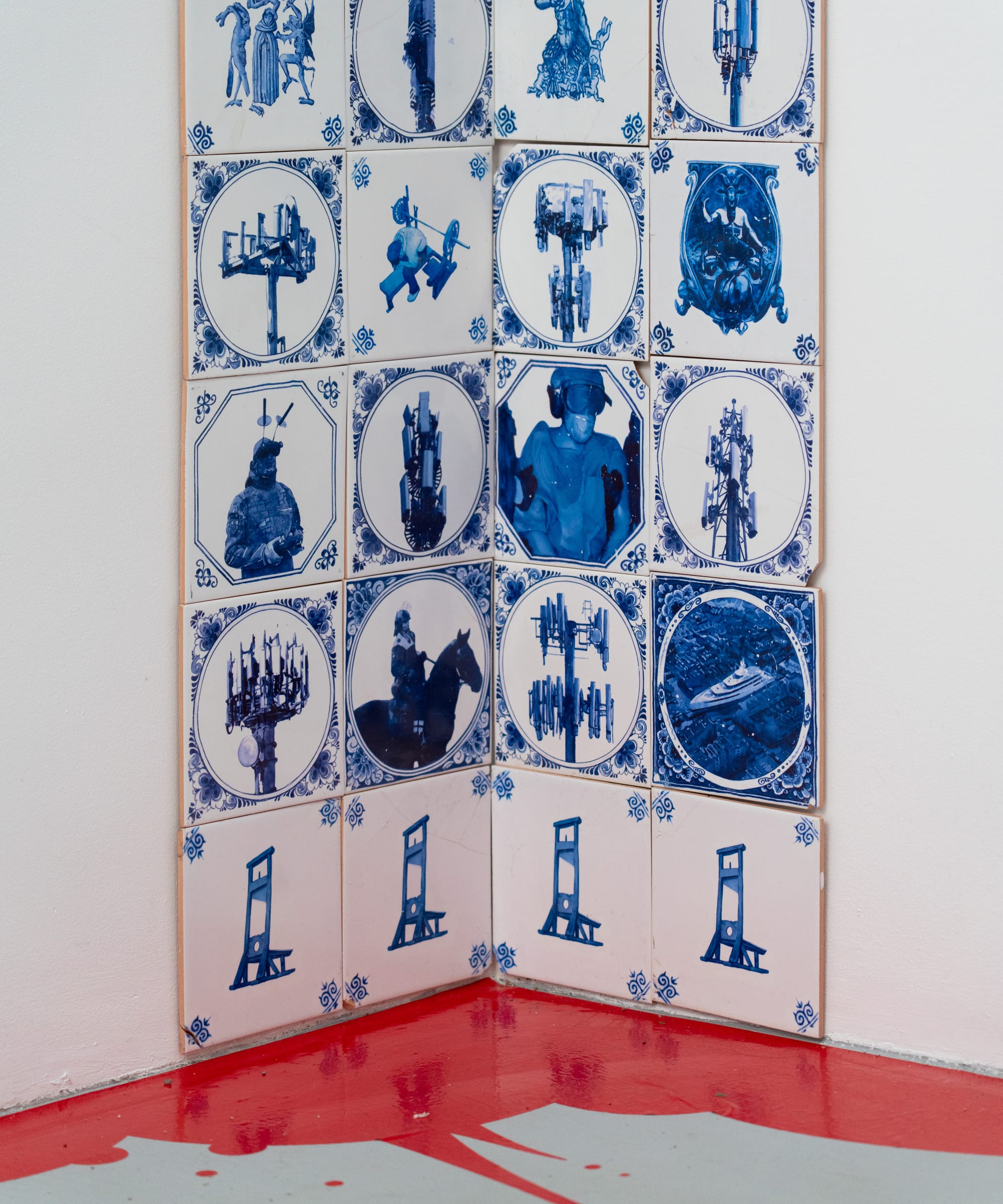
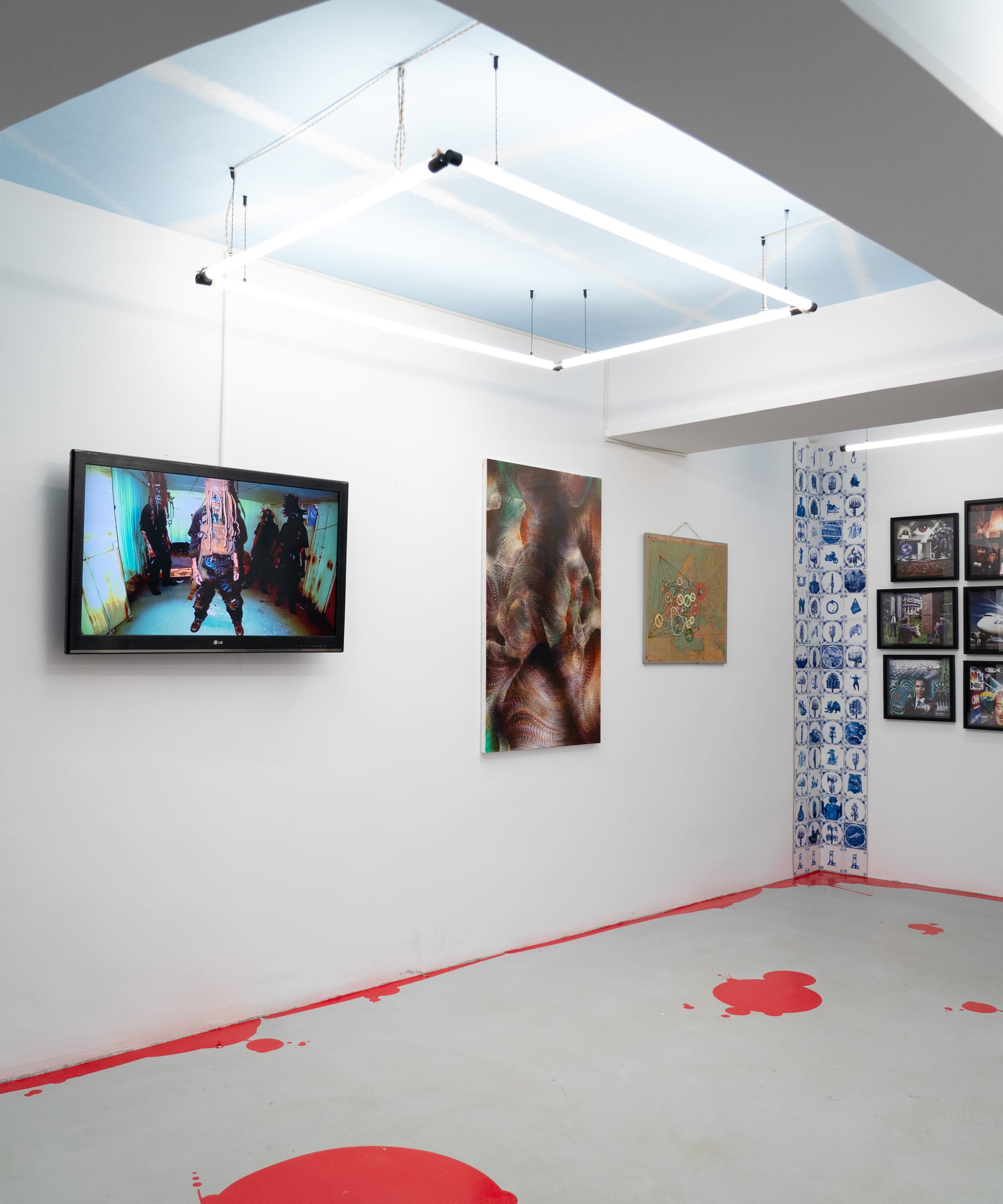
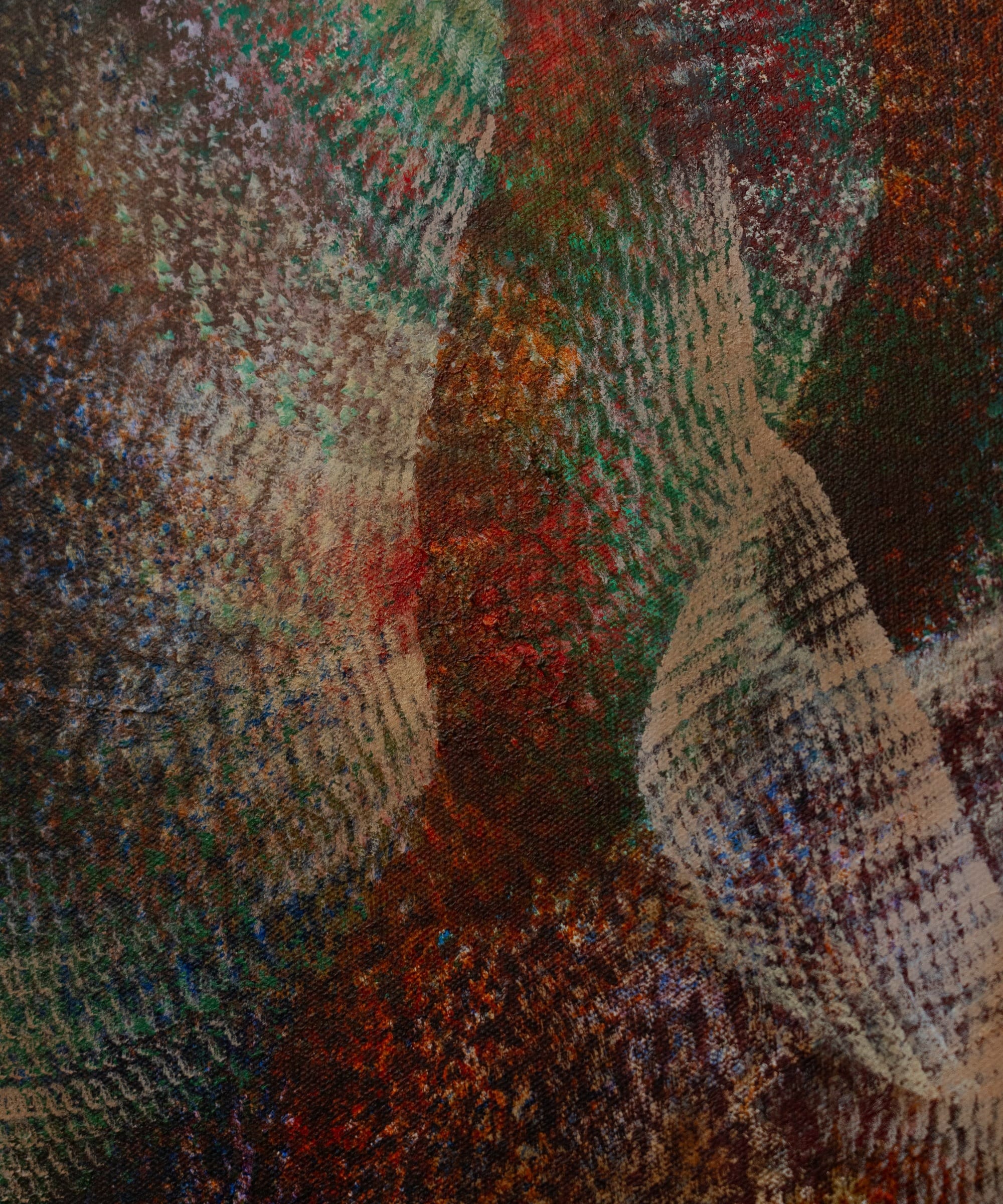
Left: "Extremely Online Deft" Tibor Dieters, ceramic "MMade_H04404_B_comp_De-Sublimate_16x9_1920x1080_renderFINAL.mkv" Jak Ritger, vinyl - Center: Work by Jon Rafman, Andrei Nitsu, Gloria Frau - Right: "EFTA00001827.pdf" Jak Ritger, aerosol & acrylic
Underneath the cross-crossing pathways lies ephemeral evidence of evil. Oozing out from under the walls seeps plotter-cut vinyl blood spills. Ever present throughout Dees's pictures is the implicit threat of violence. The body is a site for covert cognitive experimentation, slow negligent chemical decay and sudden bursts of horrific weaponry. It is the real destroyed bodies, the splattered blood, the carnage and corpses that demand theories of conspiracy, for how could a just God or fair rulers allow such atrocities to take place? At its most base level, conspiracy thinking is an attempt to make sense of a chaotic and brutal world.
Vector Reflections
Over the past couple years of diving into conspiracy analysis, I kept coming across examples of the stories and confabulations that originated as covert influence operations run by government intelligence services. Air Force Operative, Richard Doty's work in the UFO community is a prime example one such "limited hangout" designed to detour investigations into experimental aviation towards UFO obsession (see Hangout LTD. below). The circulation of unbelievable details and extravagant sprawling networks serve to run cover for the very real but less salacious mechanics of power by distracting oversight and painting investigators as kooks. The evolution of the Q Anon movement is a testament to this dynamic: what started as a obsessive attack on elites characterized as satanic cannibals developed into a rabid far-right re-election campaign for a brazenly corrupt elite, Donald J. Trump. It would seem that, in some cases, the conspiracy theory itself is the psy-op...
With this in mind, I wanted to create a visual and conceptual bridge between the deeply paranoid worldview invoked by Dees's pictures and very real episodes of clandestine military history. All of the methods of control and secret operations referenced in my window decal piece titled "Association of Hiking, Sports and Society, FM20-31B" are well researched stories, but circulate through culture as fictionalized disclosures and paranoia. You might not be familiar with the Gladio stay-behind program, but almost everyone has been exposed to the James Bond 007 entertainment franchise in which a British secret agent with a "license to kill" goes undercover behind enemy lines to protect western political interests. By bringing these stories back down to earth and remixing into quotidian small businesses, shady shell companies or shadowy consultancies, I hoped to inspire curiosity for these subjects that goes beyond the initial aversion horrific gore.
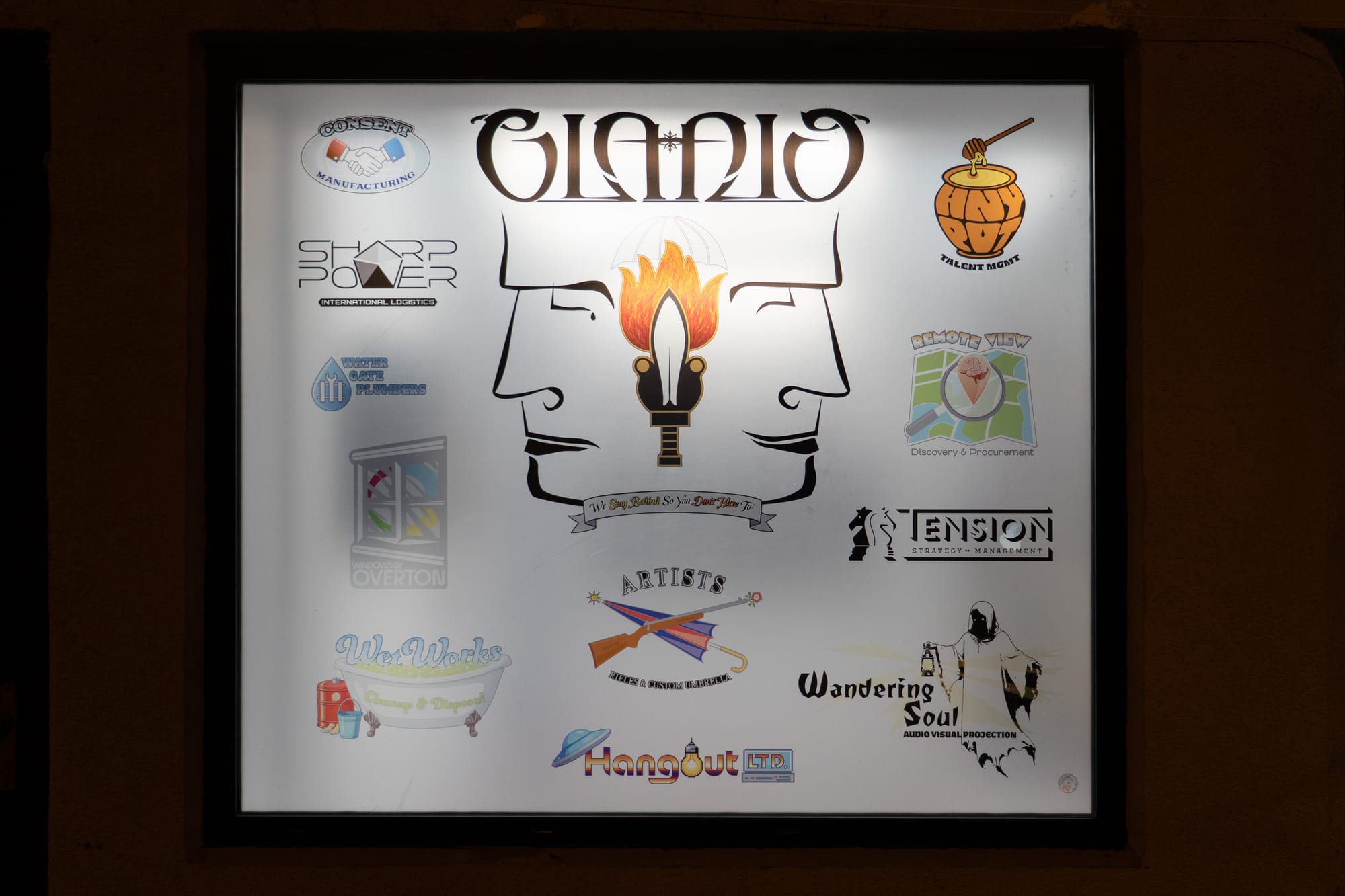
To create these designs, I went back to one of my earliest artistic expressions, making vector graphics in Adobe Illustrator (or rather, Macromedia Freehand as it was known before acquisition). My mom and dad worked together as designers in 90s making logos and newspaper ads for local businesses. My dad showed me how to use a mouse to click click click vector paths and bend the bezier handles into satisfying archways. Our Macintosh in the basement had a rotating screen called a "Radius." The black and white LCD would screech as you reoriented it on its beveled base for vertical designing. I am forever grateful for the formative design chops my parents instilled in my brother and I.
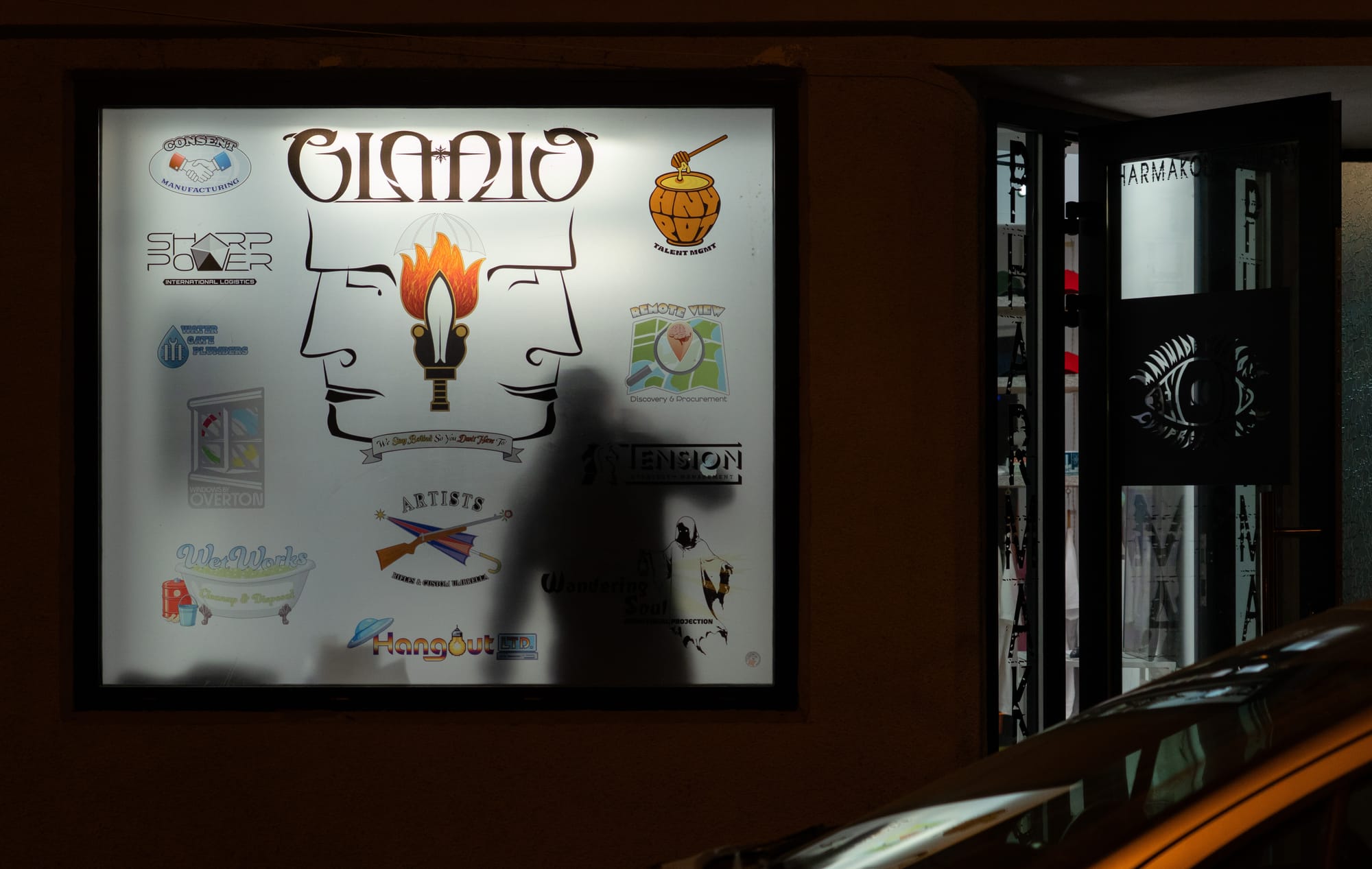
I pulled design references from a range of eras: the minimal chic law firm, the friendly neighborhood fast casual greasy spoon, the venture backed app startup, the deadhead-run electronics store. I wanted to create a parallel world through visual language as a way to hold a mirror to the para-history of clandestine operations. Corporate insignia and small business decals serve as a fronts, CIA cutouts funding modern art or surveilling you form inside a local contractor van on your block. A logo is a projection of power and during the cold war it was all about posturing, simulating, war gaming and inflating the position of the state. Perhaps through an act of radical branding we can cut through the fog of information war and recover a sharper image of history. Here are some breadcrumbs to help you track down the stories from each graphic in the piece. Happy hunting.
GLADIO - We Stay Behind So You Don't Have To!
I first started with this ambigram letterform design. It was definitely the most challenging to execute. When I was in middle school The Da Vinci Code was all the rage and became obsessed with the prequel Angels and Demons by Dan Brown. The book popularized the Illuminati / Knights Templar conspiracy theory and featured incredible ambigram designs by the John Langdon. I would spend days designing ambigrams for the names of my friends for birthday cards. I guess the skill of contorting letters into rotational or mirrored symmetry never left me. Once I had decided on a transparent window print as the format for the piece, I knew i had to create an Gladio ambigram logo so that it would read inside the gallery as well as from the street. The center star motif is a reference to the NATO logo. I wanted to callout the dual movement of the stay-behind program: western powers encouraging free and open democracy while funding and promoting subversive far-right terrorism in order to push back the encroachment of Communism. The official Gladio coat of arms is center stage - the sword, flame and parachute represent the undercover violent operations dropped into peaceful nations. Surrounding the coat of arms is a smiling / crying Janus, the greek god of transition. Janus is watching over this transitional phase of history with horror and glee, a theater of secrecy and rumors.

Consent Manufacturing
Edward S. Herman and Noam Chomsky published "Manufacturing Consent: The Political Economy of Mass Media" in 1988. The lengthy analysis showed how induced bias in newspapers, TV reporting and radio generate "five filters of mass media" that push narratives. This critique is just as relevant today regardless of the revelations of Chomsky's unfortunate associations with Jeffery Epstein. The key elucidating dynamic of the text is the insistence on passive professional persuasion by agenda setting bosses inside news rooms – instead of draconian manipulation by masterminds that colors conspiracy thinking. Rather, it is the slow alignment of incentives - talk about this and get ahead, talk about this and get demoted - that creates propagandistic media narratives. As with the David Dees imagery, I feel a certain sense of nostalgia around this analysis, as today there is such a weak effort made to manufacture the public's consent for war. Instead the powerful nations launch unprovoked unilateral attacks and barely even cobble together talking point reasoning or a sound strategy to sell to the public. Nevertheless, so much of our contemporary media landscape developed from the framework detailed in Herman and Chomsky's book, and so I thought it would be fitting to characterize it as a construction company contracted to erect today's reality.
Sharp Power - International Logistics
In the wake of Russia's attack on Ukraine and China's increased show of force towards Hong Kong and Taiwan, a new theory of power was dreamt up by international relations experts in the west: Sharp Power. Unlike soft power (attracting influence using culture and trade) or hard power (coercion through military might) this form of influence relies on deceptive, manipulative or censorial attacks on information space. The irony is that just like the notions of authoritarian power as framed by western academics in the past, this too has come home to roost as various political bodies and governing administrations employ Sharp Power strategy to try and dominate information space. We are staring down the tip of a pentagonal spear everyday after logging on to social media.
Water Gate Plumbers
The Watergate scandal of 1972-74 is probably the most well known conspiracy. Richard Nixon's White House Special Investigation Unit was created to stop press leaks and became known as "The Plumbers." After breaking into the Watergate Hotel to gather intel and plant listening devices in the Democratic National Committee. The ensuing scandal engulfed Nixon's presidency and the name itself has become a suffix for every scandal since: Gamergate, Elsagate and Pizzagate are a just couple from recent memory. The Wikipedia page for -gate controversies catalogs 333 such instances. My favorite is when the naming convention pushed lingustical limits to the absurd: Gategate. Often these stories of political blunder, misappropriated funds or institutional corruption serve as the genesis for years of conspiracy media. The kernel of truth grows into a tree of connections and cover-ups. Even the original Watergate scandal is not as it seems. The secretive whistleblower known as "Deepthroat" that blew the story wide open to the Washington Post is dramatized in political thriller "All The Presidents Men" as a concerned citizen inside the FBI that wants to do the right thing. The whole incident is portrayed as a success of press freedom and democratic process to root out powerful corruption. But, in reality, Deepthroat's motives were less idealistic. Mark Felt, the number two man at the FBI at the time, was disgruntled after Nixon passed over him when appointing a new director. His whistleblowing was less about protecting democracy than settling a professional grievance. The FBI continues to operate with impunity, in the shadows and with no accountability.
Windows by Overton
Joseph P. Overton created a diagram to explain what political think tanks do. He plotted a continuum of policy acceptability from Unthinkable > Radical > Acceptable > Sensible > Popular > Policy. He believed the job of the think tank was to produce and promote policies on the fringes and over time make these ideas more acceptable until eventual adoption. Overton was a libertarian and believed deeply in the free market as the engine of capitalism. The irony is that his legacy, The Overton Window of Public Policy, has come to represent the intractability of political gridlock, not the responsiveness of a functioning democratic process. While in the past decade, unthinkably radical political ideas – such as Palestinian liberation, Universal Basic Income and billionaires should not exist – have become widely popular political common sense and yet we are no closer to realizing these projects within our current system of political stagnation. Think tanks have become an industry funded by powerful conglomerates of private interests with the mandate to wither away any so-called "free market" and labor protections in favor of complete sectorial monopoly or duopoly.
Wet Works - Cleanup & Disposal
Borrowing from Russian mob slang, this term refers to contract killings by hitmen that 'paint houses'. I have become fascinated by stories like Tony Costa, the Cape Cod LSD killer who refuses to recount his statement that a CIA operative was present for and directed his brutal killings. Running through America's obsession with "true crime" and serial killers is the refrain, the suspect was known to authorities. It would seem that there is stable of criminally unstable murderers that are kept around in order to be operationalized by three letter agencies in order to make someone disappear... but that's all a paranoid fantasy... right?
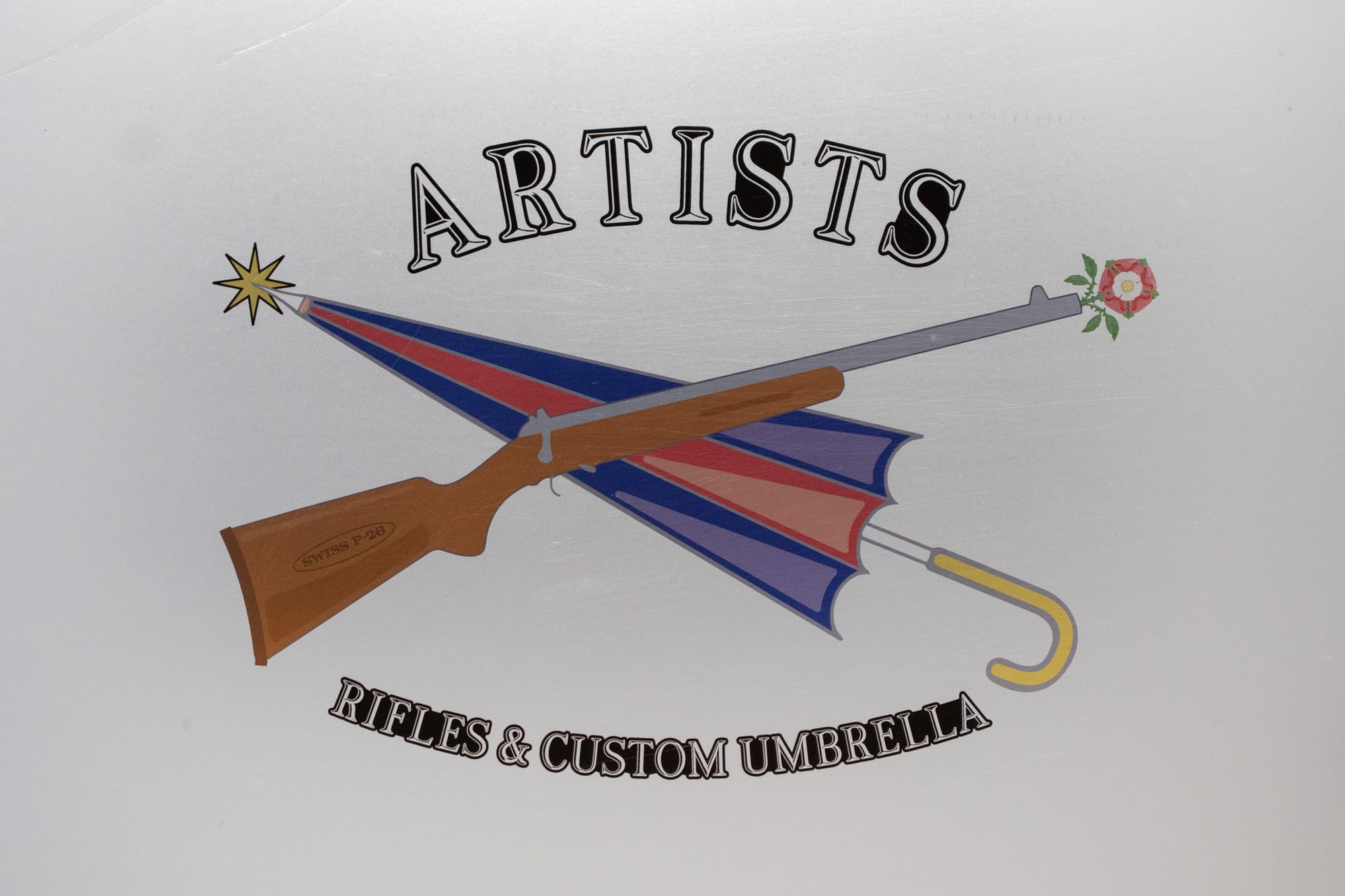
Artists Rifles & Custom Umbrella
The 21st Special Air Service Regiment was England's reserve forces in the 19th and 20th century. It took on the name The Artists Rifles after taken up residency in a former art studio to carry out training and planning. After WWII it became England's stay-behind program in Western Europe in the event of an invasion breaking the Warsaw Pact. Although they never saw action in this period, the organization further strengthened military alliances that would later develop in NATO. On the cheekpiece of my Artists Rifles logo is "Swiss P-26", a reference to Switzerland's secret army while the English royal flower, the Tutor Rose sticks out of barrel: a metaphor of the post-war framework for peace backed up by deadly force. Crossing over is an assassin's umbrella, customized with a ricin bead, ready to be injected into the thigh of dissonant journalist, Georgi Markov. The lethal device's colors are taken from the KGB coat of arms. I wanted to include this extremely creative device as a counter to possible claim that my piece only focuses on the evils of western powers.

Hangout LTD.
The term "limited hangout" refers to a managed act of disclosure or measured transparency from secretive governmental agencies. Most well known are the series of leaks and "whistleblowing" in the UFO community in the 90s, and continuing right up to today. In a piece from 2023, titled Unlimited Hangout I bring into the focus the history of extraterrestrial intrigue as a result of influence operations by various Air-force agents, Richard Doty being the most prolific. The book and documentary film, Mirage Men (2013) dive into this history while Trevor Paglen's CYCLOPS art cycle further explores the implications. With this logo, I wanted to capture the glowy h4ck3r vibe that makes the alien research world so enticing. The swinging lightbulb and Radius monitor suggest some kind of Web1.0 chat log turned interrogation room only to be recalled years later through hypnosis regression therapy.

HNYPOT - Talent MGMT
The honeypot or honey trap is one of the most enduring elements of spy stories. Going all the way back to Helen of Troy, right up through film noir's seductive femme fatale that lures the hardscramble P.I. to his downfall. In the 20th century the honeypot turned to geopolitical curio with foreign agents' attraction and betrayal. This plot device is recycled again and again in spy thrillers and movies. There is something about the nature of this affair, the knowledge of hidden motives, the double-crossing, the tearful declaration that "yes it was my mission, but I love you anyways" that really defines today's sexual politics of class and suspicion. That is why I crafted it as a flashy friendly talent agency, ready for LinkedIn recruitment. It is the seedy, classy, dirty, noir quality of the honey trap that has been surgically removed and replaced with perfectly curated TikTok presentation. It's not at the smokey hotel bar that you encounter your weakness, but in the reels algorithm from which an IG Baddy emerges to send you a Pegasus spyware-laden DM link.
Remote View - Discovery & Procurement
The Star Gate Program was a top secret U.S. Military program that ran for two decades in hopes of building psychic weapons. The program developed a psychical process was known as "Remote Viewing" that involved deep mediation and visualization in the hopes of gathering intel on enemy strongholds, plans or targets behind enemy lines from the safety of an army base. It is unclear how successful the program was, some wild claims have been made, but it more or less seems to be a strange annal from the history of failed attempts at cognitive weaponry. The declassified document detailing the program has served as a primary source for a vast ecosystem of conspiracy theories and narrative speculation. The files were even dramatized at the highest level by Millie Bobby Brown's character 011 in the hit Netflix's nostalgia thriller, Stranger Things (2016-26). In the show, the child's psychic abilities are trained for recon and targeting. I wanted to show how this spooky piece of military history has become part of mass culture by reducing it down to something as innocuous as a VC-backed startup app, perhaps in an alternate timeline the Star Gate Program was successful and is now licensed out by a tech company (as much of the tech developed by the military is).
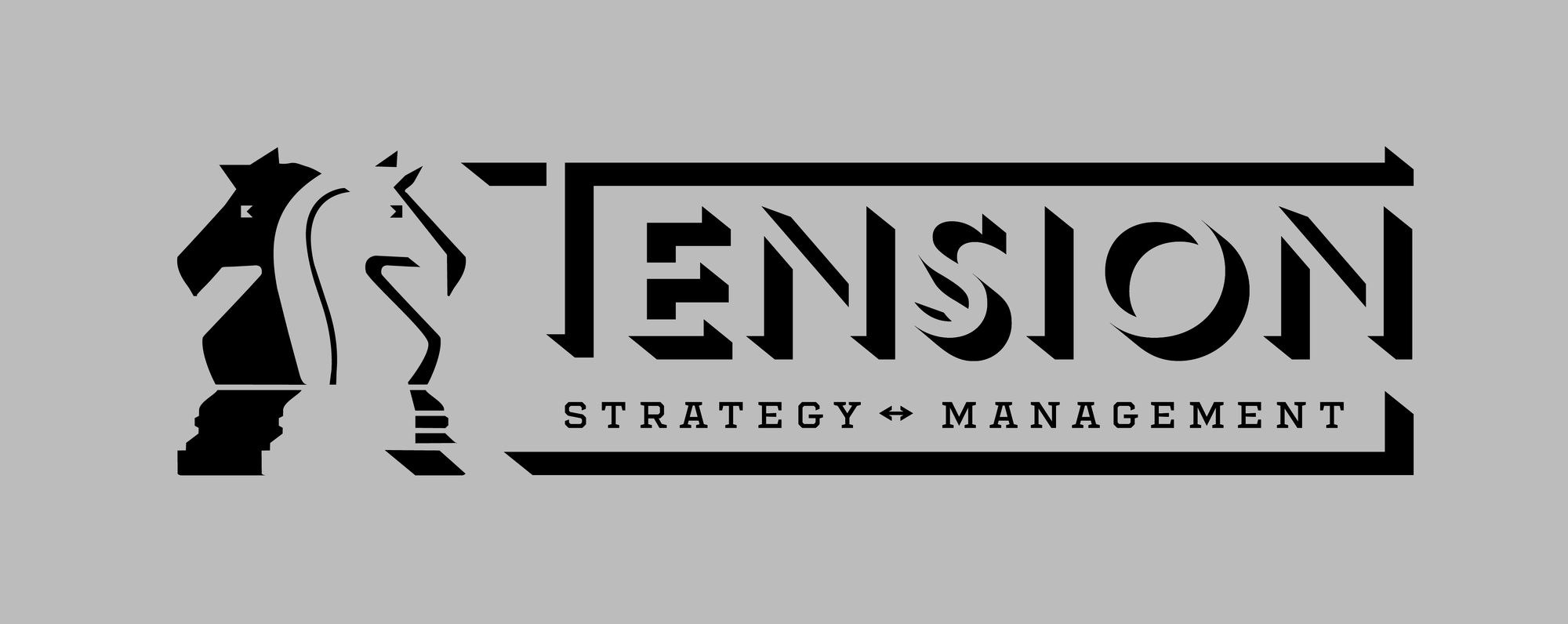
Tension - Strategy Management
Geopolitical brinkmanship sees nations as chess pieces in a multidimensional negotiation of power. The individuals on the ground — that suffer the trade blockades, sanctions, invasions and bombing campaigns — only factor in as abstractions in the maneuvers of war games. The strategy of tension is a directive from the state to encourage partisan violence rather than project civilians. Although denied by officials, the evidence put forth by Daniele Ganser (Operation Gladio historian) for the existence of this strategy is quite significant: collusion between stay-behind operatives and far-right militias, government cables, funding and weapons transfers. Looking back, it would seem that this strategy has only gained prominence in the toolkit of pacification and control: divide into sectarian antagonism, wait for cold threats to turn hot and capitalize on the terror by routing a desire for safety back into support of a strong police state. Today, we can see this play out over and over again through social media echo chambers and radicalization pipelines. At the highest level, the U.S. President fear-mongers pushing middle America back into the conservative-democratic stagnation that serves the capitalist class. I cast the strategy of tension as a well-heeled McKinsey-esque consulting firm in order to speak to the detached sober calculations that lead to such a chaos and disintegration of social order.
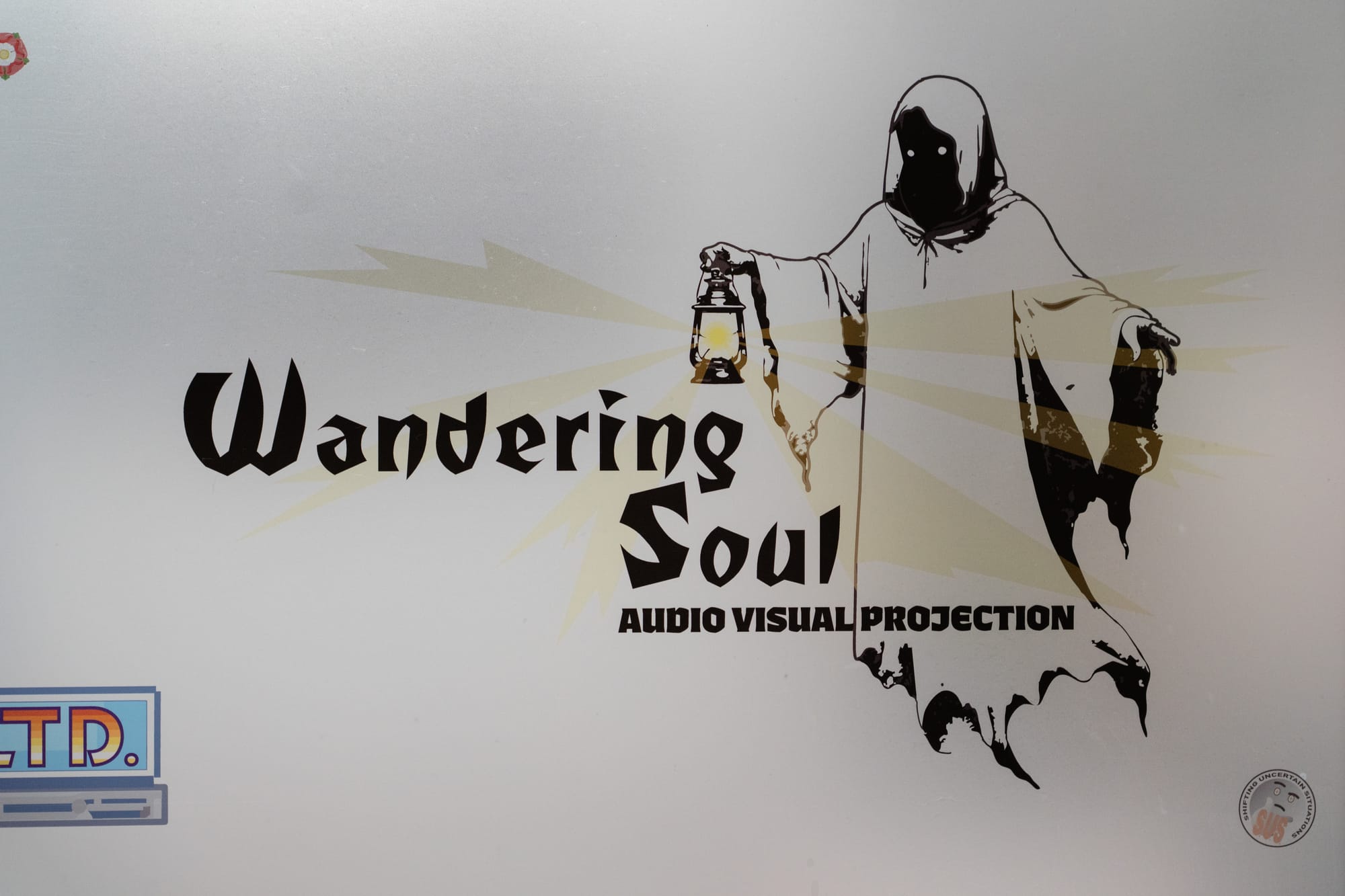
Wandering Soul - Audio Visual Projection
The final installment in this excursion through logomachy, is perhaps my favorite design. Browsing the old head punk record stores, the musty smell and deep cut recommendations make me feel connected to artists and scenes of the past. In search of graphic intensity of punk and hardcore music aesthetics end up borrowing military and even sometimes fascist styles and symbols. In Pervert's Guide to Ideology (2012, dir. Sophie Fiennes), Slavoj Zizek explains that the German metal band, Rammstien's performance is the most effective anti-fascist act because it allows us to enjoy the sounds, mass demonstration and affective register of fascism while countering the associated politics. In this way it takes power away from these aesthetic weapons and defangs future demonstrations. I was thinking about this dynamic while creating the design for one of the most disturbing Psy-ops of all time. Operation Wandering Soul was a secret campaign during the U.S. war in Vietnam that involved helicopters flying over Viet Cong positions blasting distressing audio while projecting images of ghostly forms in the trees. The audio was a ghastly distorted voice of a dead Viet Cong militant describing that after dying in battle his soul could not return home and was doomed to wander the earth forever. The effort to demoralize and encourage defection among Viet Cong was mostly unsuccessful, but it remains one of the most creatively freakish pieces of military output. The project uses synthesizers and vocal distortion at a time when these tools were just being discovered. Listening back to the audio clip today feels like experiencing an extremely cursed noise performance. One last easter egg: hidden in the cape of this specter is a map of Vietnam.
Cinematic Revelations
The exhibition period winds down and I prepare to travel to Bucharest for a closing video performance (Spooky Castle II on the way!), I am revisiting this material with fresh eyes. I recently participated in an artist talk with fellow DoNotResearch artist, DJ Meisner and fellow Man-Made Horrors Beyond Comprehension exhibitor, Tibor Dieters. In the talk, among many other rabbit holes, we talked about the experience of getting swept away in the seduction of conspiracy theory, the apophenic feeling that everything is connected, when you are made aware of an object, logo or story and start seeing it everywhere. I described the Conspiracy Corkscrew model that I created in 2020 after the summer of fireworks psy-ops, in which each quadrant of the political spectrum began framing events through their own politically-tinged conspiracy theory. After the talk I reflected on how during the war for attention it is the narrative form of the conspiracy that is the most potent and therefore more prevalent while less salient stories are buried in algorithmic feeds. Conspiracy theory creation is an existential imperative for content creators and political leaders alike. To borrow a truism from Jenny Holzer "LACK OF CHARISMA IS CAN BE FATAL."
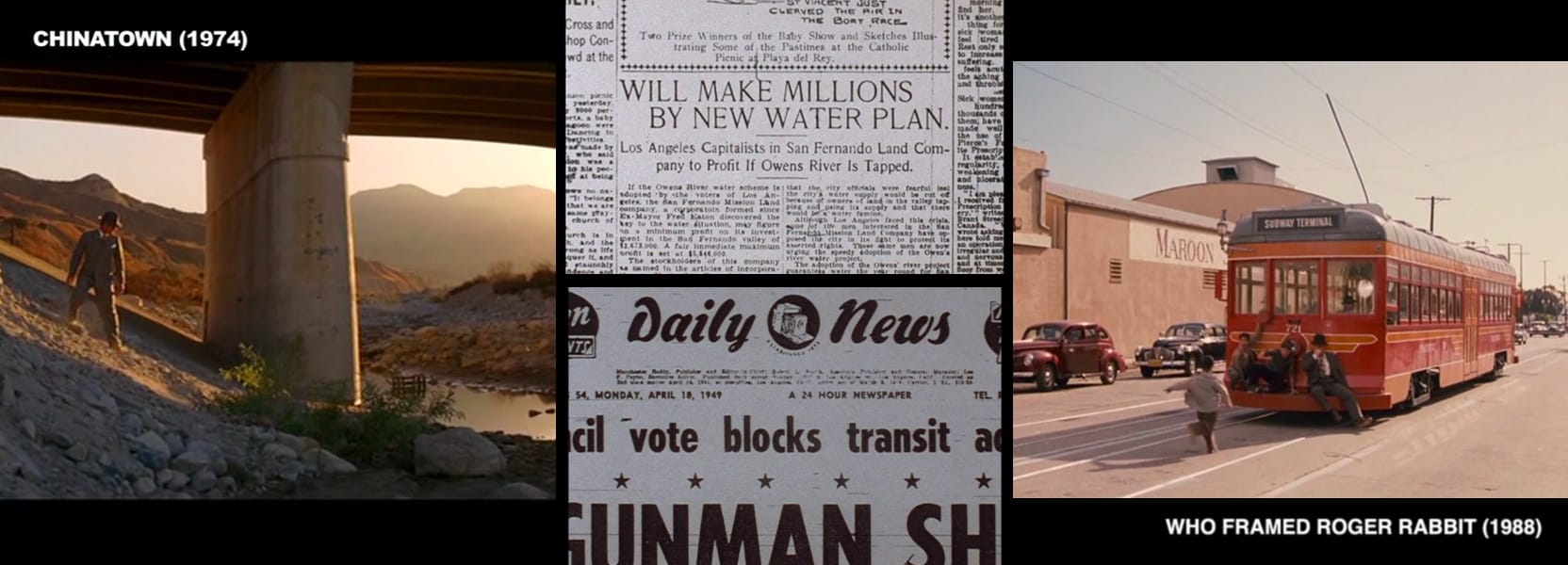
Many journalists and cultural critics have written at length along these lines, but I often find these takes to be somewhat unfulfilling, I am left wanting more. Yes, social media breeds a million flowerbeds of conspiracy, but there remains something intrinsically human about the desire to represent history through dark machinations of power. It's almost as if the official retelling of history does not hold enough emotional weight, it doesn't quite feel as intense as it was to live through the events. In the masterpiece of essay film criticism, Los Angeles Plays Itself (2003) Thom Andersen describes how the city of L.A. developed in the popular imagination through movies. He shows how the genre of seedy L.A. corruption story: Chinatown (1974), L.A. Confidential (1997) and Who Framed Roger Rabbit (1988) all frame the political scandals and economic designs that shaped the cities as secret plots by the rich and powerful. Andersen critiques these storylines by showing that the real events that they are based on were not conspiracies behind closed doors but rather played out in the public eye through newspaper coverage.
Dam building, trolley divestment, housing projects and police brutality were all hotly debated in their own time and settled through city council votes. The powerful lobbies that swayed these votes, supported or denied public projects were widely known, not masterminds controlling situations from the shadows as portrayed in the films. The conspiracy villain makes for a much better movie and our historical amnesia is such that the impact of these films supplants collective memory. Chinatown's conspiracy of water rights expropriation and pedophilic robber barrens has become the lingua-franca for the founding of Los Angeles and dissolves the egalitarian story of bringing water to the masses that the film is based on. The conspiracy is simply a better story and in the age of images, the best story wins the day.
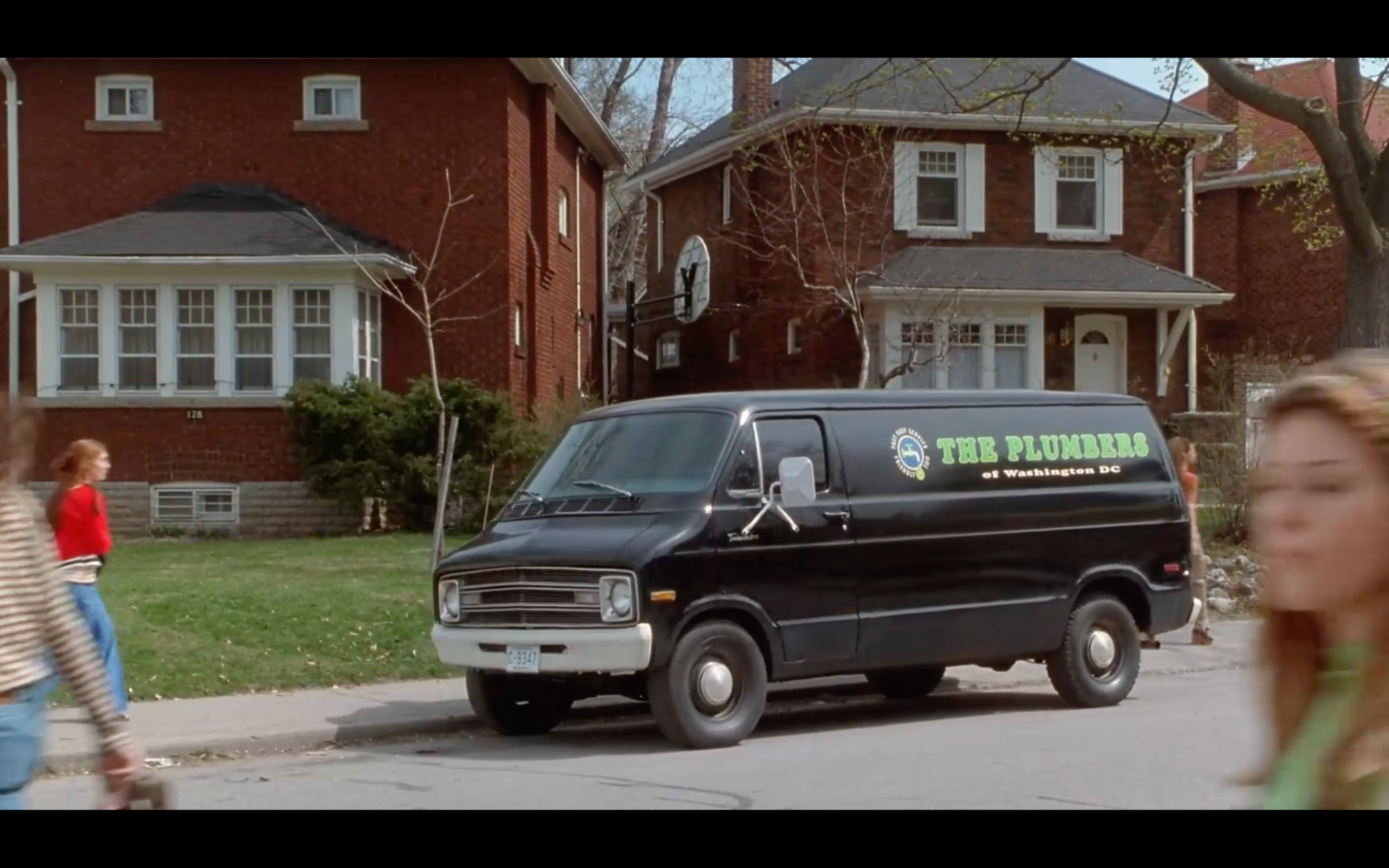
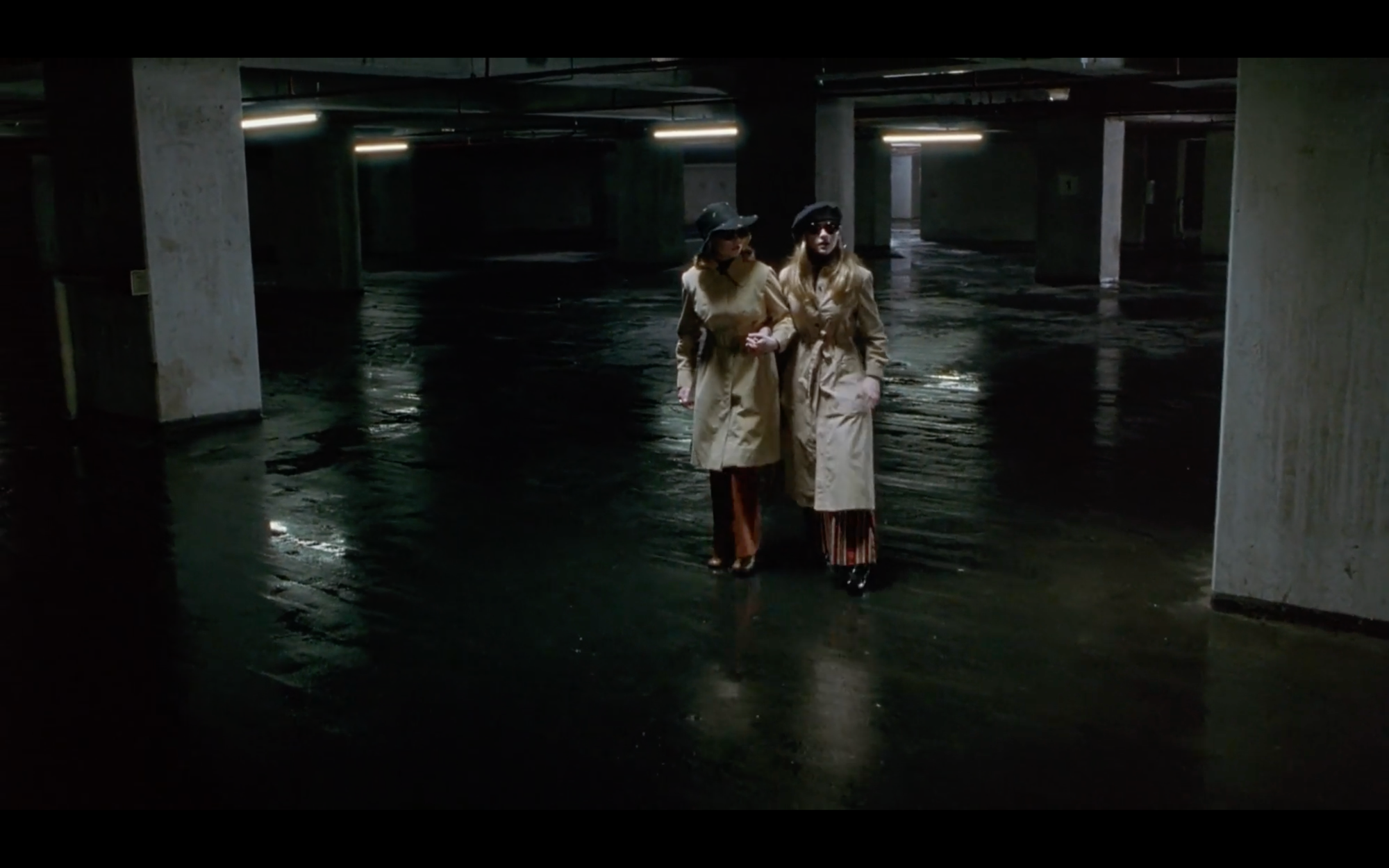
Stills from Dick (1999) dir. Andrew Fleming
Or perhaps, the movie version can tell the truth about lies as Benjamen Walker suggests in his analysis of films dramatizing the Watergate scandal. (see Water Gate Plumbers above.) In his essential podcast Theory Of Everything, he proposes that the movie Dick (1999) is actually the best and most honest watergate movie. The historical fiction teen comedy stars Kirsten Dunst and Michelle Williams as two ditsy yet plucky teen girls placed in a Forest Gump type situation at the heart of 'Tricky Dick' Nixon's downfall. Chance encounters, mix-ups and betrayed romantic crushes lead to the parking garage "Deepthroat" disclosures. Portrayed as unscrupulous buffoons by Will Farrell and Bruce McCulloch, Woodward and Bernstein decide to never reveal the identity of their secret source because "it would be too embarrassing." In this way we get closer to the real motives behind the disclosure through raunchy teen comedy than through the sobering gravely serious thriller. Behind the perfect conspiracy stories we tell lay actual odd coincidences, strange connections and butterfly effects that can never fully be accounted for. The looseness of parody can sometimes more accurately express the chaos of turbulent moments and the messy politics driving history.
The worst thing you could possibly do when it comes to making movies (or streaming serials) about conspiracy is leave your viewer filling unsatisfied. Stranger Things (see Remote View) started strong in Season 1 (2016) and then went progressively downhill by repeating and rehashing every nostalgic trope ad nauseam. Over five seasons across ten years the show honed a formula of nested cliffhangers inside every beat, episode, and season while at the same time explaining the plot beforehand using figurines and overhead projector maps in painstaking detail using fantasy IP. The result leaves no room for surprise or even modest intrigue and sadly became emulated across the entertainment industry.
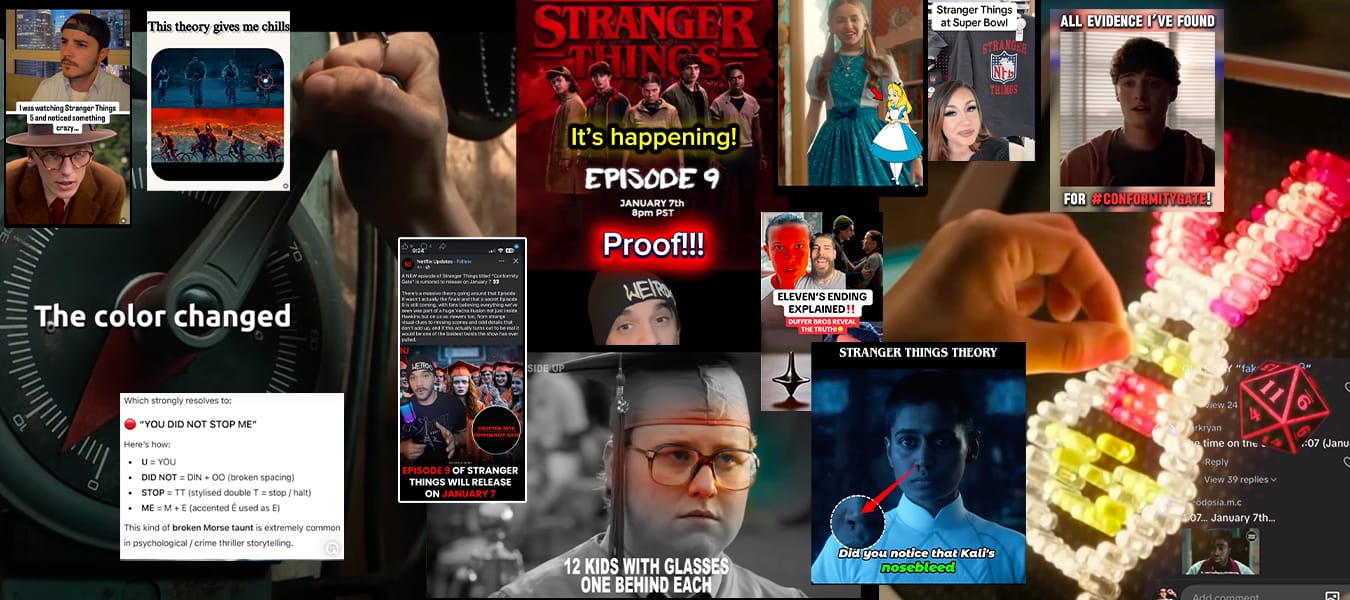
It's no wonder that the show cooked up in a lab to addict viewers to the next image could not deliver a satisfying ending. But, I find it quite remarkable that the tremendously anticlimactic Season 5 (2026) conclusion of Stranger Things left fans feeling so disappointed that they took to TikTok and IG Reels to craft fan theories about how, maybe, just maybe, this wasn't the actual end of the show and that the showrunners were sending secret signals that a new FINAL final episode was soon to come. Even more bizarrely creative, fans crafted alternative ways to interpret scenes that injected more exciting and complicated storylines. The LARPy alt reading layered simulated dimensions, doppelganger characters and secret easter egg tells, all within the internal logic and videogame-esque rules of the show. Its as if that story created by Stranger Things could not satiate the superfandom's need for complexity of data and so they were forced to invent conspiracy theories to fulfill a limbic response trained on the mass-stimuli sensing-making muscle of existing online today.
In 2026, David Dees's work feels prophetic. Our collective desire to turn everything into a conspiracy, to vibrate at the rhythm of chaos, to cast a shady veil across history is all surfaced in crisply composed visions through his pictures. As we face the daily onslaught of Gen-AI images we are made painfully aware of how much our already shaky footing of "truth in photography" is being eroded. The logics of AI image generation embeds everything and anything in close proximity: all data can be recomposed in the model fluidly and indefinitely. The era of infinite media presents an endless plateau of narrative possibilities. Perhaps the narrative form of the conspiracy theory is the only real way to make sense in this inundation of information. Dees's compositions prefigure by about 20 years the aesthetic tendency towards maximalist culture references (Peter Griffin in hypebeast designer outfit talking about Deleuze over minecraft gameplay) and expose the schizoposter origins of these tendencies. Rather than the sleek pitch decks of silicon valley, I think that if Artificial General Intelligence ever shows up, it's networked data-mind will gravitate towards a world view and visual expression closer to the vibrantly graphic cinematic universe of David Dees.
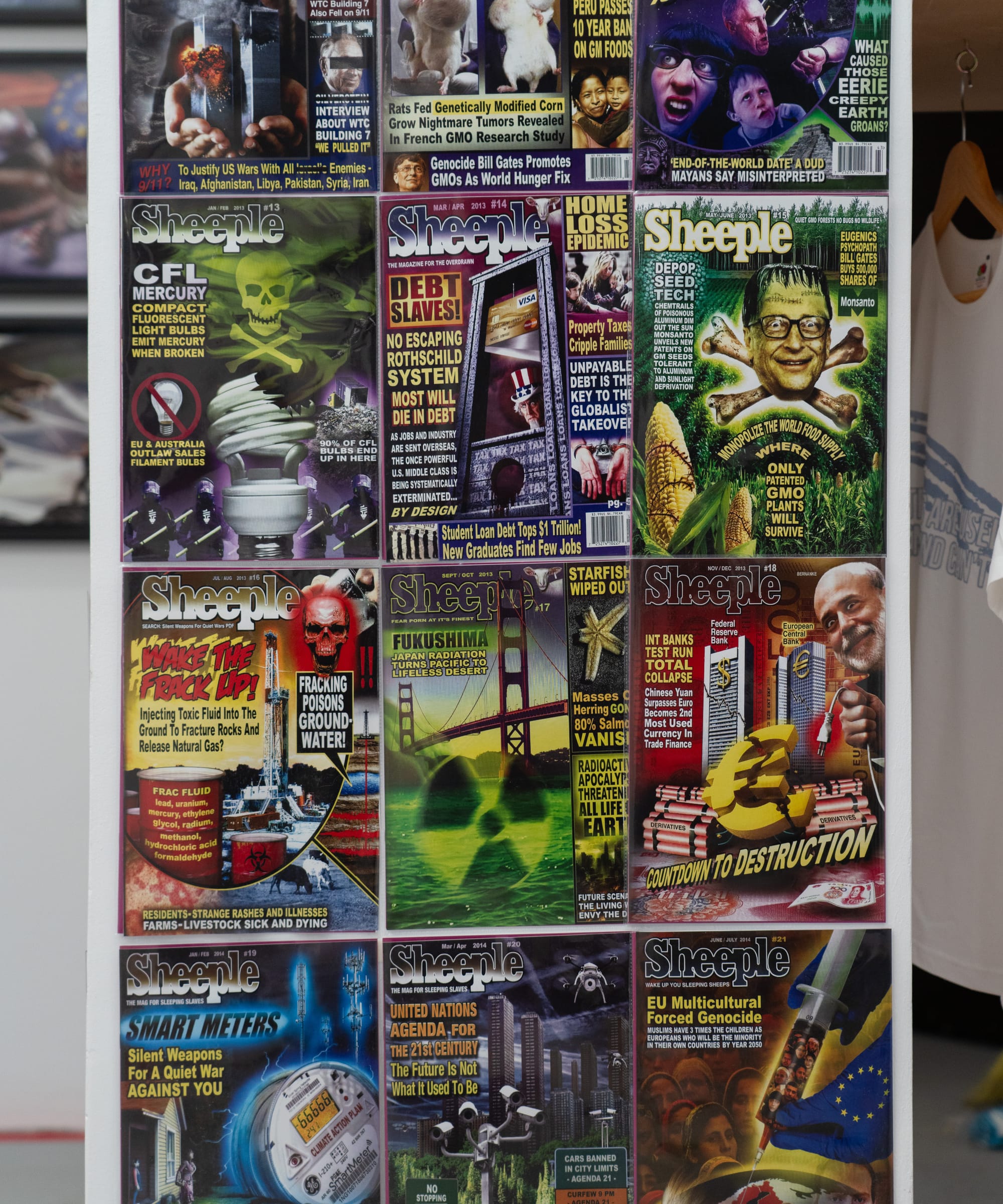
"Man-made Horrors Beyond Comprehension" is curated by Aaron Moulton, at Pharmakon Gallery, Romania, Bucharest - February 27 to April 26, 2026. Featuring work by Sara Bezovšek, the Estate of David Dees, Tibor Dieters, Gloria Frau, Mark Lombardi, Andrei Nitsu, Jon Rafman, Jak Ritger, Dorian Electra & Count Baldor. Media partners: PostPostPost & Subliminal Jihad. Logo by Jak Ritger.