
The Great Lock In of 2026
What late-stage Influencer culture tells us about the real threat of an AI-Industrial Complex or how internet slang could save the world
Entry 02 in The Blind House Essay Series
by Jak Ritger
Read the first entry in the series titled "On Devirtualization". This essay was commissioned by postpostpost for PPP II in the summer of 2026.
Why is the universe so quiet? The dark forest theory states that intelligent lifeforms would stay hidden in the interest of self-preservation. After many years of applying this metaphor to internet sociality, I think it is time to also consider the other—less sexy—answer to the Fermi paradox: The Kessler Syndrome. As dramatized in Dramamine® sci-fi, Gravity (2013), this catastrophe scenario is kicked off by the collision of orbiting objects, spaceships, satellites or trash. If the ensuing debris cloud is dense enough and Earth’s orbit too crowded a chain reaction of collisions, debris and more collisions will snowball until a permanent particle cloud blankets the sky. The gray death veil would encompass the exosphere, locking us in and forever ending satellite communication, space exploration and extraterrestrial travel.
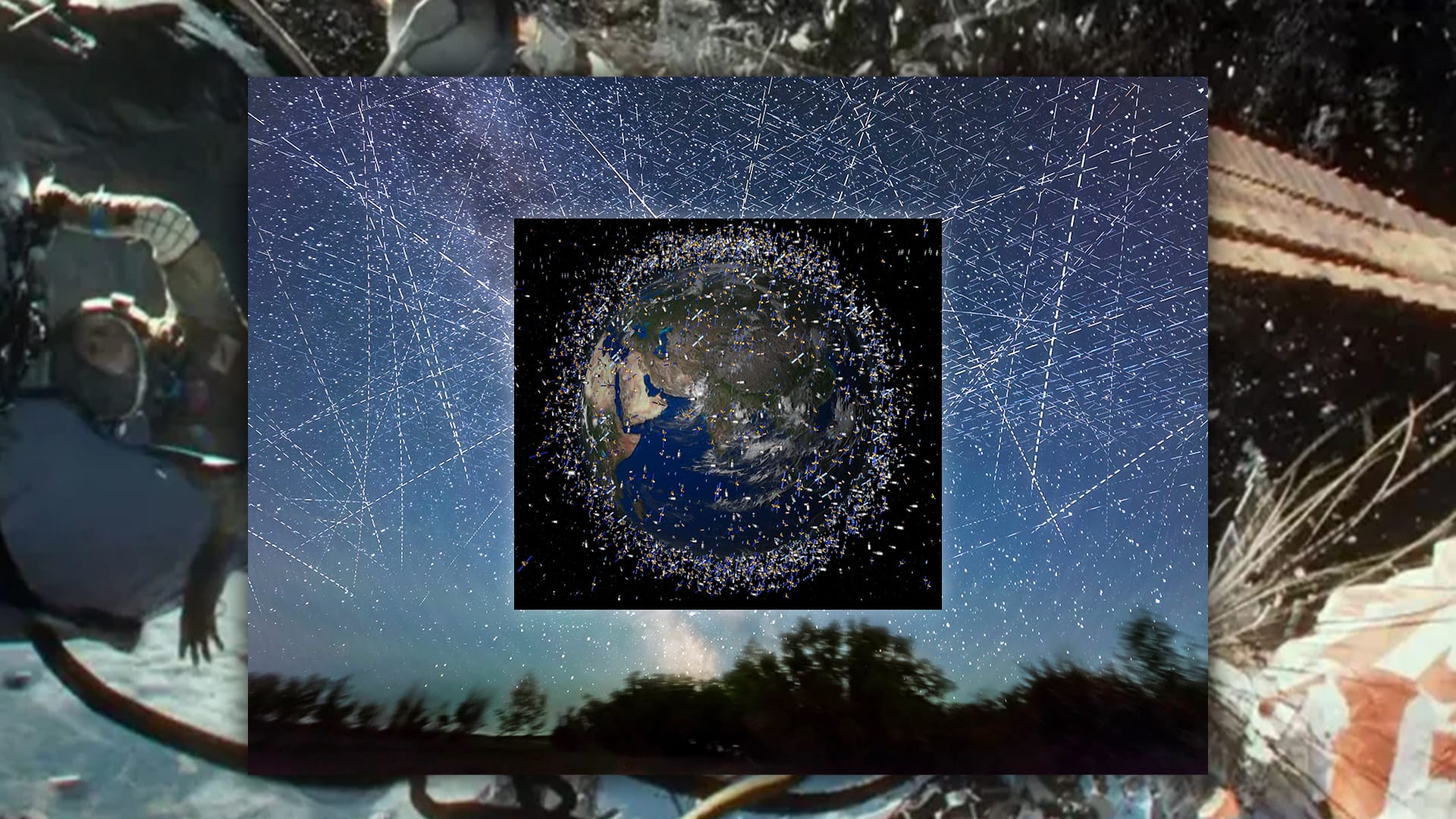
Luckily for us, a network of agencies are tracking the estimated 750k space objects (human-made or otherwise) around-the-clock to ensure the Kessler Syndrome never happens. This task is made more difficult with every Starlink launch. Looking at the great lengths that scientists go to to prevent this catastrophe makes me think about other domains that—through negligence or corporate capture—never created safeguards and have suffered permanent state-change events. The shift from industry to “industrial complex” is starting to feel like we are living in a world in which environmental, political and economic systems are locked in. This stuck feeling of intractability characterizes the current mood. Looking back at how social platforms swallowed The Real and analyzing this process of lock in, can hopefully provide some insight to avert the next systemic disaster: AI-Industrial Complex.
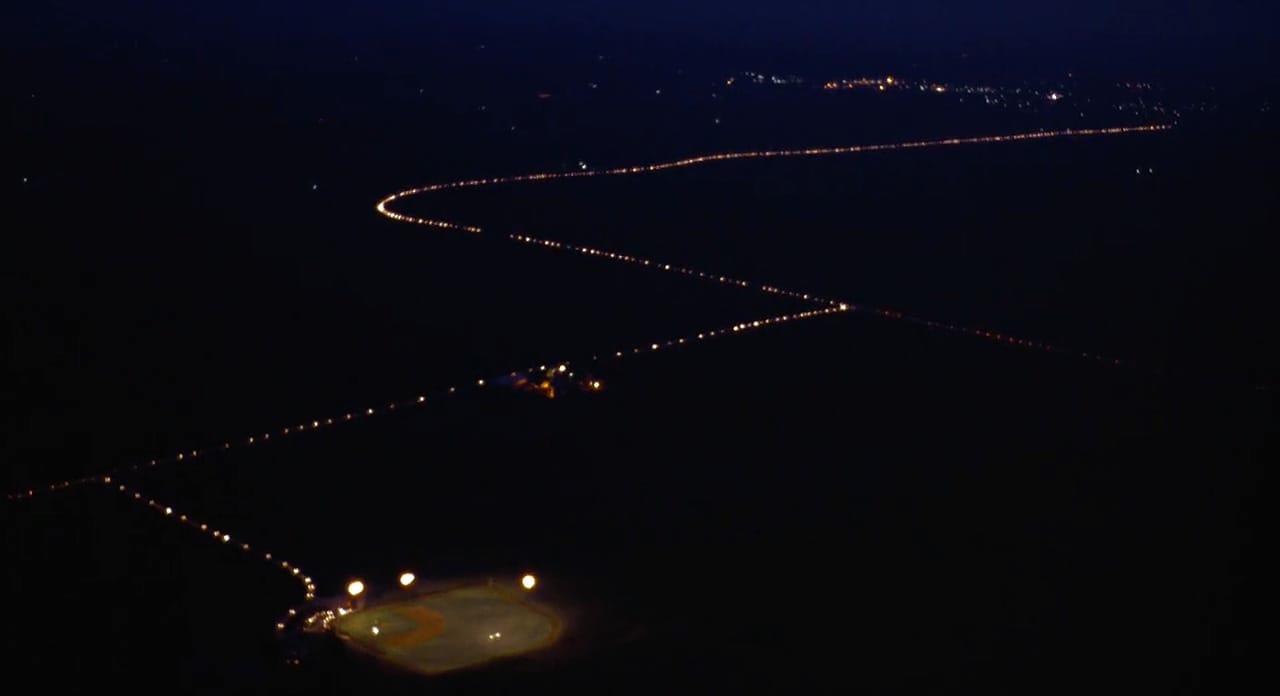
Preceding a lock in catastrophe is the “Induced Demand” mentality as seen in supernatural baseball classic Field of Dreams (1989), “If you build it, they will come.” Induced Demand is best understood through the paradox of highway construction's inability to solve car traffic. Surely if you simply add more lanes then there will be less slow downs during high through-put rush hour? But the opposite happens, more lanes means more people encouraged to drive and less investment in public transportation resulting in more bodies in steel boxes stuck in more traffic. On social platforms, digital images function in a similar way. Users are lured to effortlessly produce and share content with friends, but the resulting endless stream leaves users fatigued, unable to connect. Technological development is almost always seen as a progressive march towards a better, easier, quicker, safer future—but taking the dynamic of Induced Demand into account—it becomes multi-dimensional: a move towards one particular future forecloses another, locking us into the political relations embedded in these decisions.
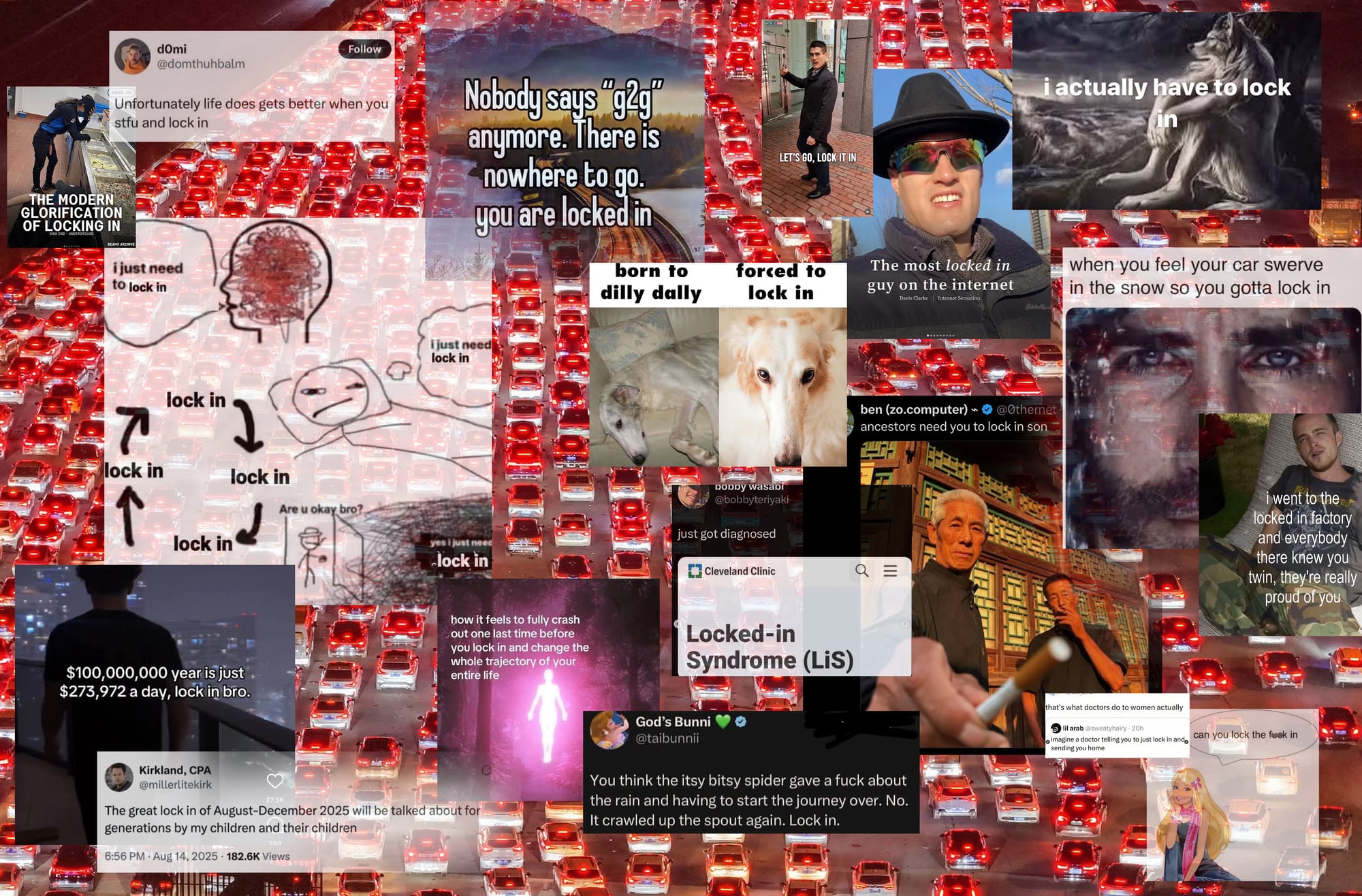
In 2023, I started thinking about lock in when the phrase took over the internet as a shorthand for “blocking out distractions during an intense period of focus and productivity.” I scrambled to write my take but had difficulty locking in and so I watched with anguish as the meme came and went. But, unlike so much ephemeral internet culture, lock-in stuck around and became canonized as contemporary vernacular when we experienced “The Great Lock In of 2025.” So, here I am, two years later, finally locking in.
it’s ok, I just gotta lock in for a couple hours.
The term’s staying power I think is owed to its ability to characterize a wide range of situations and emotions. You can lock in on homework or videogaming. The underlying sentiment of locking in is an acknowledgment of just how difficult it is to focus today with constant pinging of messages, doomscrolling or daily news that grips our limbic systems. To lock in is to be aware of these realities but choose to block it all out in pursuit of a personal or professional goal. Locking in is a useful concept for the hustlebro cold calling leads as well as the oil painter banging out a body of work in solitude. It's massively cross-cultural in the way that locking in reveals our shared awareness of capitalism in overdrive: higher cost of everything, fewer well paying jobs and an academic system not preparing you for any of it. For those without trust-funds, locking in is our best last hope of financial security and having a phrase to describe an intensity of labor—that often forces us to go against our political beliefs—allows us to engage with less dissonance, “it’s ok, I just gotta lock in for a couple hours.”
In the post-Covid era, many have penned postmortems on The Influencer as economic mirage or cultural force. Dead Internet Theory says it's all bots, Social Media Death Spiral says it's all ads now and Enshittification says money makes it worse. The throughline is that social media matured and became less creative and more restrictive. Now, the Gen-AI is speedrunning the same process. What started as a radically open system of creating strange manifestations has quickly locked into a narrow scope of use-cases: stock photos, illustration or advertisement.
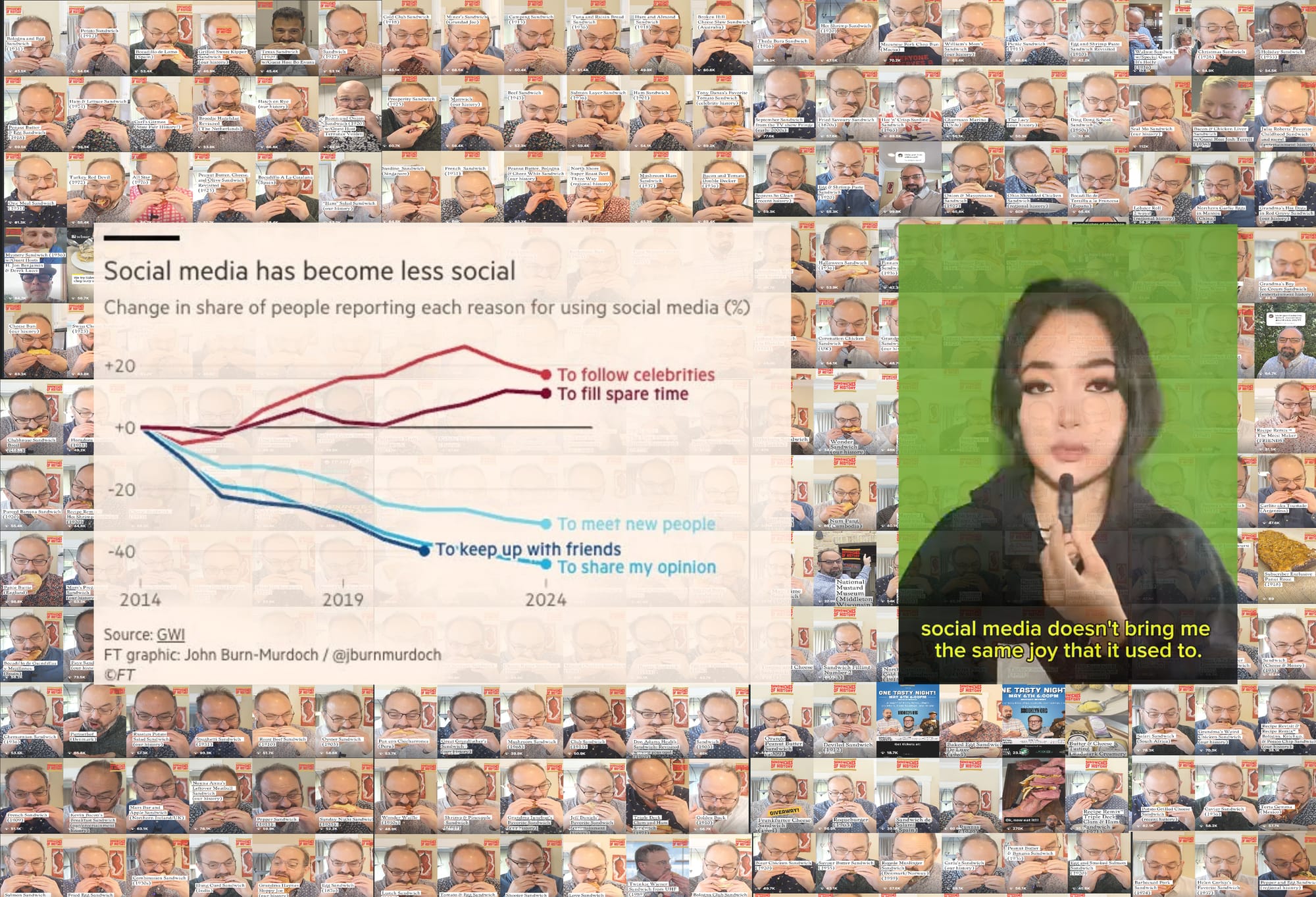
The process of expressive restriction on social platforms is a result of a craven effort to satiate “The Algorithm” which has supplanted God as the fickle decider of fates. Creators are induced to recreate their one viral hit over and over again until they go crazy. Everything from hook, facial expression, concept, music, wardrobe to thumbnail must be restaged in exactitude with only slight updates of fresh filler content. “The Algorithm” demands this monomania because reproducibility is the language of computer vision: the algorithm scans the video for image and sound patterns, determines similarity to previously successful content and if it checks off secret boxes—pushes it to the top. Creators report feeling trapped and demoralized after locking in to a formula combined with the grueling hours of content creation. The speed and ease of generating variations of formula with AI content has made the scourge of monomania more endemic. Vertical video burnout fatigue is distilled in the iconic “pet lizard” video by Summer Emerald (aka Salesforce Child) in which she laments how her livelihood is tied to her sickly pet lizard that makes her apartment “smell like lizard piss.” The stress of endless production is the sad endpoint of a communication technology designed for leisure and connection.
Social platforms began as tools for promoting politics, books, movies or music but have evolved into containers for discreet cultural objects. Some musicians and singers that got popular via viral posts have all but abandoned music in favor of selling merch around the videos they produce. Luka Maxim, Sophie Truax and Dev Lemons are a couple of most artistic examples of musicians whose inventive video concepts have overtaken their music careers as prime creative output. Conversely, many musicians are forgoing the production of full fledged music videos in favor of vertical video. Christian crooner, Forrest Frank exclusively releases music as short form video in an effort to keep all attention locked into his social page (rather dispersing through Youtube). And then there is Citizen. A singer who literally made a song with the lyric “fuck it, I’m locked in” that circulates primarily through viral clips with “transition hooks.” It's the anthem for social video swallowing up all other creative pursuits. The same way that podcasts are now consumed through clips, this music is best understood as raw material for the platform. Aside from simply deepfaking influencers, A.I. platforms are in the process of making this leap from research engine to fully contained conversion marketer. Recently, brands like Skims, Glossier and Target allow users to browse and buy all inside ChatGPT. What happens when the ecommerce market—that props up the internet—becomes locked into chat-bots?
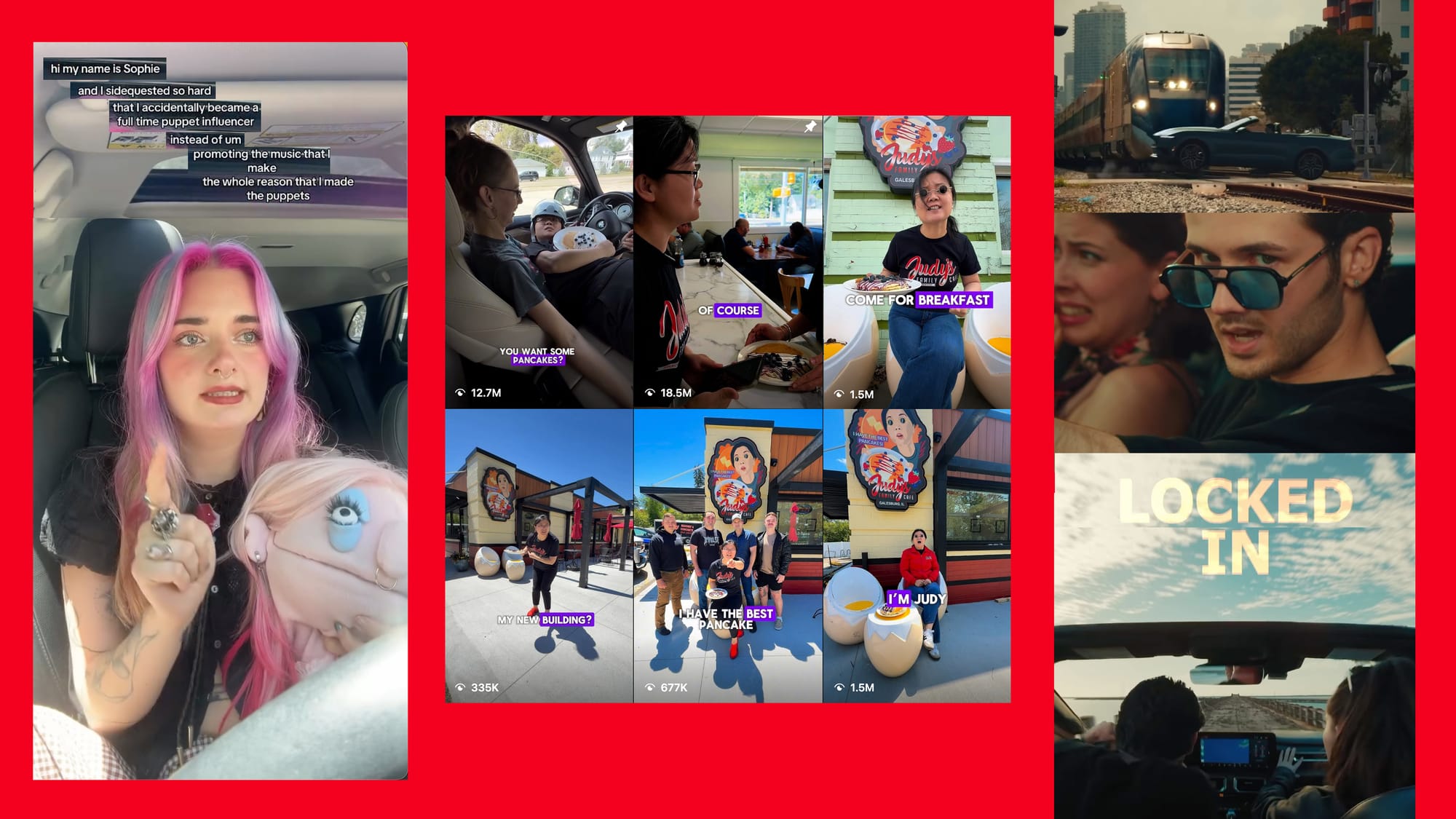
In hindsight, virality—the product offered by social platforms to users—can have damaging effects on individuals and is being rejected by younger users in favor of privacy. The massive visibility that “going viral” provides is really meant for big brands competing for attention. And yet, the platforms induce the demand of virality for all, even small businesses that do not fit into this framework. One example, Judy’s Cafe in Galesburg, Illinois amassed a huge following for hilariously clever videos that usually involve chaotic accident footage cutting to Judy delivering her catchphrase “Hi I’m Judy, I have the best pancakes, come for breakfast.” The massive viewership outpaces any logical local promotion strategy. Viral media is a super-sized imperative and society has become locked into social media as the arbiter of news, pop-culture and personal relationships.
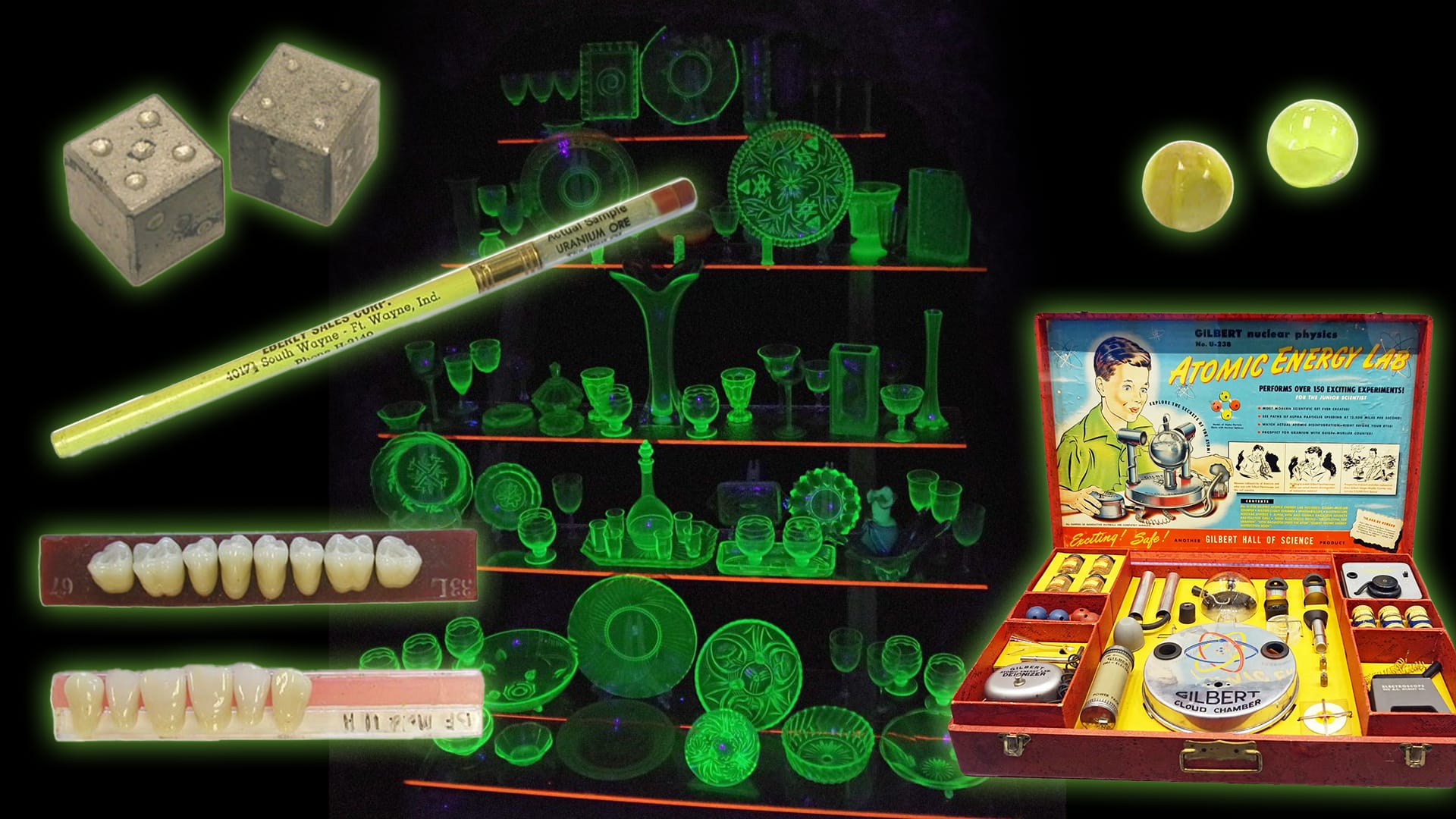
In the beginning of the “Atomic Age” in the post-war 1950s, Uranium was used in all types of consumer goods from children's toys to dentures to glowing tableware. After the awareness of radiation's deleterious effects on the body, these products disappeared and the Nuclear industry became relegated to energy and medicine. A.I. companies are searching for product fit by plugging Gen-A.I. and LLMs into every digital interaction imaginable. As some users fall into “A.I. Psychosis” while A.I. driven classrooms are being rolled out. Will we be able to curtail the A.I. industry towards beneficial domains (like scientific research, logistics and medicine) or will it go the way of social platforms with Urianium-enriched doomscroll daemons in every pocket?
I created the Blind House Series to explore the invisible digital labor of retouching that constructs the visual world around us. The evidence of this labor is all but erased in the final product: imperfections smoothed, de-blemished, color corrected and stamp tooled. The mark of a successful post-production artist is invisibility. Now, ten years later, a new layer of invisibility has been reached. Gen-A.I. systems have adopted the logics of retouching and thus changing the way we read photography. My digitally altered pictures that took months of work now appear as generated from thin air. The irony of instant A.I. generation is that it eliminates the enjoyable parts of the artistic process. The searching, filming, mistakes and aberrations that reveal new ideas are all made obsolete in the name of efficiency. We answer emails while AI writes poetry. I made this series because I actually enjoy photography and working with the material on a pixel-by-pixel level. It is through this process that I discover what the work is about.
As our collective sense of The Real is blurring and we are developing new methods for Proof-of-Humanity. A popular tactic right now is to capture Behind-The-Scenes footage. Everyone from crane operator to supermodel is bringing audiences inside as a way to demonstrate authenticity. In some cases, such as the high fashion runway show, Behind-The-Scenes-ness cuts against the mystique of the spectacle. Often B.T.S. is used as an addictive social hook: first showing the making of and then the result. Musicians are using B.T.S. moments to cut through the noise and showing real and raw for fans, pulling stunts like dropping by a causal open mic to debut a new song or pulling back the curtain on a fucked up label deal. But as with every social trend, Gen-A.I. is not far behind. Fake B.T.S. scenes from movies and T.V. have started to flood the #BTS space. Impossible crane shots from Harry Potter and Stranger Things or even weirder—James Cameron directing Avatar from atop a rope bridge over an abyss as if the virtual production was actually shot on location. We are locked into an arms race for reality as A.I. systems attempt to map our world.
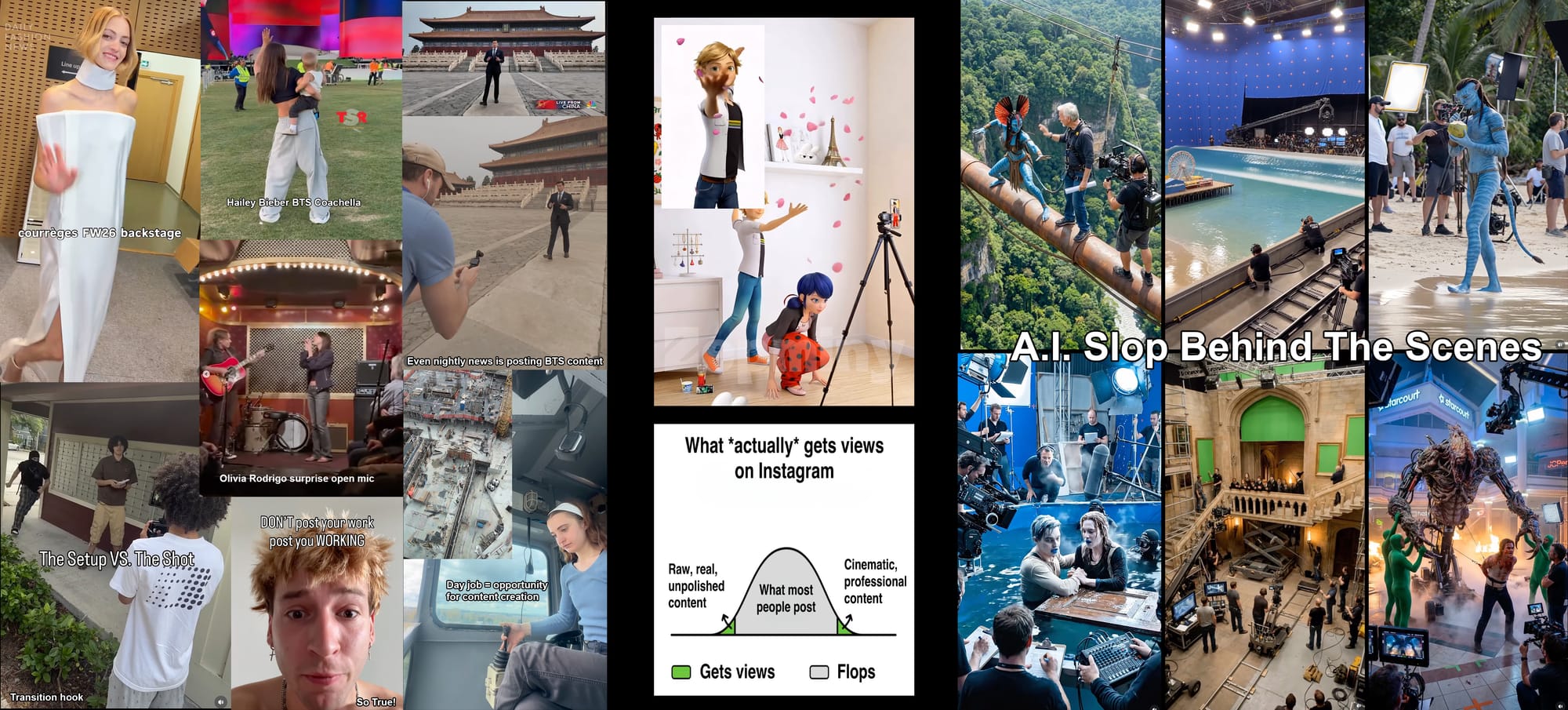
We are locked into an arms race for reality as A.I. systems attempt to map our world.
The goal of constructing a digital twin is made more difficult if not impossible by the tsunami of user generated material poisoning attempts to train models on the open web. This problem is known as “model collapse.” There's a non-zero possibility that A.I. systems will be locked into 2021, the year consumer grade generative products came online. It's informational Kessler Syndrome as a result of the induced demand of the very technology that is being advanced. While this problem lingers around the edges, A.I. doomsday discourse centers the possibility of superintellegant A.I. gaining sentience and enslaving humanity. This fear was summed up by Eliezer Yudkowsky and Nate Soares’s book “If Anyone Builds It, Everyone Dies” in 2025. And while the threat of superintelligence is concerning, this discourse shifts preparation and planning to a longer timeline that is more advantageous to the A.I. Industry. Pope Leo XIV’s Encyclical Letter “Magnifica Humanitas.” brings the threat down to earth, celebrating humanity and critiquing all the ways that A.I. integration is already destroying societies by threatening labor power and automating genocide.
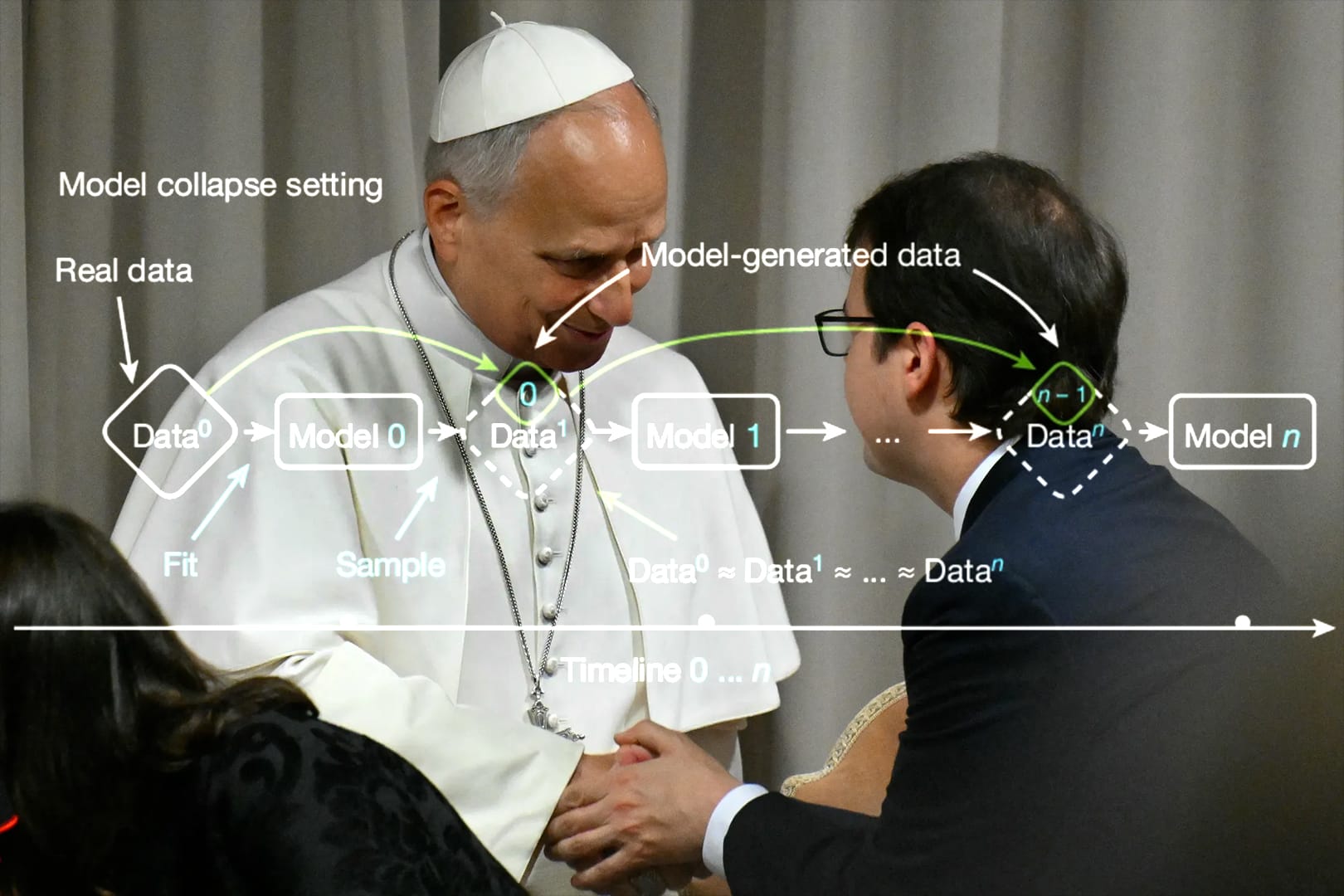
With the world’s economy now staked to the industry’s success, we are facing something closer to “model collapse” in which we lock into the politics and social relations as circumscribed by these systems and their tech billionaire owners. Just as social platforms have narrowed the range of human creativity, the domination of AI tools will not be found in their effectiveness as prolific engines of expression but in the reduction of expectations to a point where disenchanted cultural objects are acceptable. To resist the completion of an A.I-Industrial Complex, we must appeal to a sense of dynamism that could be lost if incentives collide and a chain reaction of institutional capture is kicked off. The time is now to Lock In.
Subscribe to Punctr.Art for extra research content below
Sophie Truax on Instagram
monomania as durational performance
One of the best to ever do it. The infamous pet lizard video. Also check out Salesforce Child artwork and manifesto for the next 5000 years.
Knerdy Knives, another example of musician turned content creator after viral hit
Etymology Nerd breaks down model collapse in LLMs
EB Films videographer explains how to promote your business with faux-BTS content
Sometimes a video has everything all at once. Breakdown of Citizen's viral transition hook techniques, which is itself a prime example of BTS content
More Citizen BTS-transition-hookery
i didnt understand i couldnt believe
Davis Clarke Lock In supercut edit that i made